Maritime Industry Standstill for ANLCA @72 As Sanwo-Olu, Olori Haastrup, Others Commend Its Role in Nigeria’s Economy
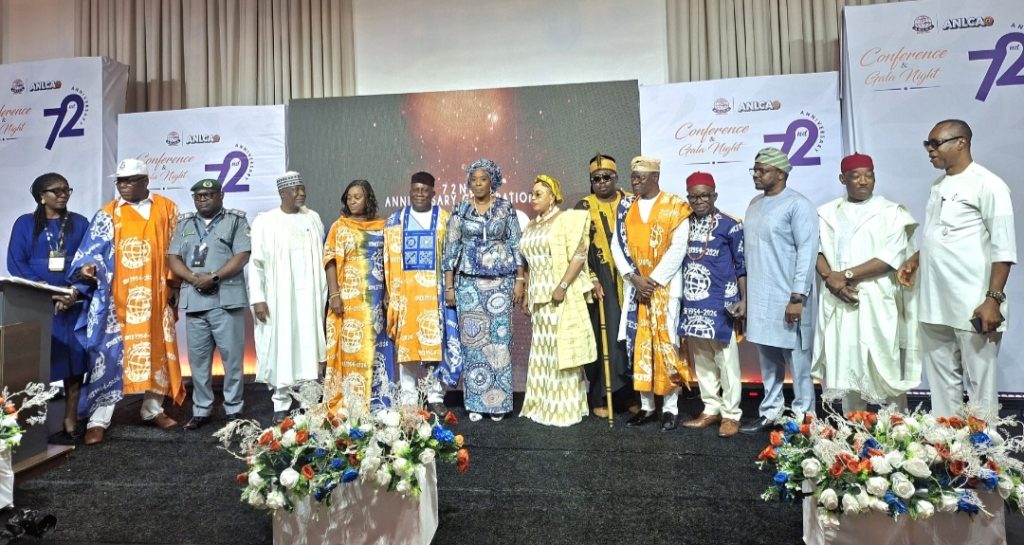
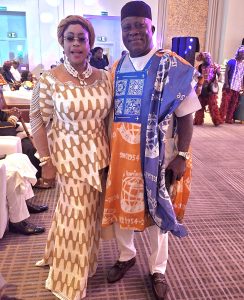
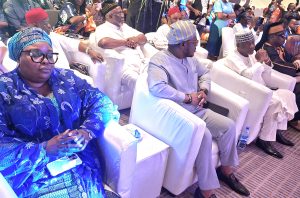
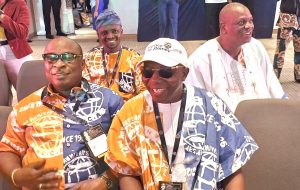
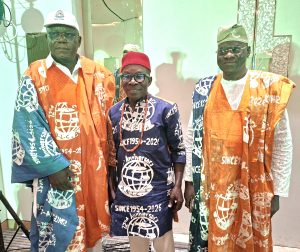
Group photograph of stakeholders present at 72 anniversary celebration of Association of Nigerian Licensed Customs Agents (ANLCA) on Tuesday

By DAPO OLAWUNI
The Nigerian maritime industry paused on Tuesday as top government officials, regulators, terminal operators, royal fathers and industry leaders converged on the Marriott Hotel, Ikeja, Lagos, to celebrate the 72nd anniversary of the Association of Nigerian Licensed Customs Agents (ANLCA), with speakers commending the association’s role in Nigeria’s economy.
The anniversary was held under the theme “ANLCA Celebrating A Legacy Of Professionalism Advancing Trade Facilitation and Shaping The Future Of Customs Brokerage.”
The Governor of Lagos State, Babajide Sanwo-Olu, represented by the Commissioner for Commerce, Corporate Trade and Investment, Folashade Ambrose-Medebem, described ANLCA’s 72-Years as a remarkable milestone.
He noted that ANLCA was established in 1954, six years before Nigeria’s independence, and that while the country and the business of trade have changed, the association has remained an important part of the customs and maritime ecosystem.
According to the governor, licensed customs agents help businesses navigate the processes that move goods through the ports, airports and borders every day.
When that work is done professionally and transparently, he said, it helps businesses move faster, protects government revenue and gives traders greater confidence.
He said this is particularly important in Lagos, whose ports remain a major gateway to the Nigerian economy, adding that port efficiency affects not only businesses but also ordinary Nigerians who depend on the goods, services and jobs trade creates.
He said that as Lagos expands its maritime infrastructure, including the Lekki Deep Sea Port and other port opportunities, the state looks toward a future in which it can handle more trade and connect Nigerian businesses to a much larger African market.
He welcomed the efforts by ANLCA and the Nigerian Ports Authority (NPA) to address congestion along the Apapa Port and Tin Can Island corridors, stressing that port traffic is not merely a transport problem but one that adds costs to businesses and delays the movement of goods.
He also commended ANLCA’s empowerment programmes and its attention to members who have served the association, saying they show that an organisation’s strength is measured not only by its achievements but also by how it treats its people.
Sanwo-Olu urged the association to protect the values that have sustained it for 72 years, insisting that integrity must remain at the heart of the profession, and that members, especially younger ones, must be equipped to operate confidently in an increasingly digital trading environment.
The Governor assured the gathering that the Lagos State Government will continue to support an environment in which legitimate businesses can operate, investments can grow and those who contribute to the economy can make greater profit.
The Chairperson of the Seaport Terminal Operators Association of Nigeria (STOAN) and Executive Vice Chairman of ENL Consortium, Olori Vicky Haastrup, described ANLCA members as indispensable partners in the nation’s port ecosystem, saying terminal operators cannot function without licensed customs agents.
According to her, ANLCA remains a noble profession and a critical pillar of trade facilitation across seaports, airports and other port corridors.
“72 years is a testament to endurance, readiness, professionalism, and an enduring commitment to Nigeria’s maritime and trading community. Without ANLCA, we cannot function. Whether seaport, airport, wherever you have any ports, you are very key to our trade facilitation,” she said.
She congratulated the National President and the National Executive for sustaining the association, adding that port efficiency depends on effective collaboration among all stakeholders. She said customs agents are at the heart of Nigeria’s port business, and that their professionalism, compliance and engagement with terminal operators and government agencies directly affect the speed and ease of cargo movement.
“For this reason, we regard ANLCA and its members as our partners in progress. We have enjoyed tremendous support and understanding from ANLCA,” she stated.
Haastrup noted that the theme of the anniversary, professionalism, trade facilitation and the future of customs brokerage, is fitting for building an efficient, competitive and business-friendly port environment. She stressed that the shared objective of all players must be to eliminate avoidable delays, improve transparency, embrace technology, promote compliance and create an environment where legitimate trade can flourish.
She also commended the Federal Government for creating an enabling environment for business in the maritime sector.
“I want to seize this opportunity to thank the Federal Government for creating an enabling environment for business in the maritime sector. What we are experiencing today under the leadership of this President is something we have not enjoyed for a very long time,” she added.
The Chairman of the Nigerian Revenue Service (NRS), Dr Zacch Adedeji, represented by the Director of the National Single Window Project, Tola Fakolade, also paid tribute to the association. He traced ANLCA’s journey through the growth of the ports, the introduction of new customs procedures, and the shift from largely manual processes to computerised systems, to today’s world of integrated platforms, data-driven risk management and international trade agreements.
At every stage, he said, members learned new systems, trained their people and explained changes to clients, even while still figuring them out themselves.
“That capacity to change is the real secret of your longevity,” he said.
Fakolade described trade as one of the main engines of the Nigerian economy, bringing in the raw materials factories need, the machinery businesses depend on, the goods families buy and the food people eat, while also carrying the country’s exports to the world.
He noted that trade is closely tied to revenue, as customs duties and related levies form a significant part of government collections that pay for roads, hospitals, schools and security. “When trade flows smoothly and honestly, the country is stronger,” he said.
According to him, ANLCA members, who prepare declarations, classify goods, apply rates and guide traders through the process, have been at the centre of that flow for over seven decades.
The Chairman of the occasion, a former President of ANLCA, Chief Peter Okocha, said clearing is a wonderful profession, acknowledging that some people consider it degrading to be a clearing agent. He said he remains proud to call himself one, noting that even after he acquired African Petroleum (AP), his life started as a clearing and forwarding agent.
He suggested the association may need to consider changing its name, since many agencies have metamorphosed, citing the Federal Inland Revenue Service (FIRS), which is now the Nigerian Revenue Service (NRS), and proposing that ANLCA adopt something simple.
He also urged members to advise their principals, such as the Nigeria Customs Service and the NPA, that they cannot function without licensed agents, and that whenever the association requires their presence at the highest level, they should honour it.
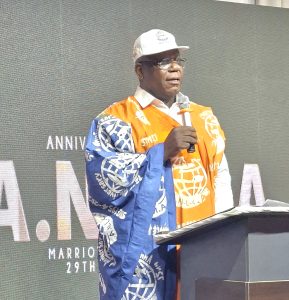
In his address, the National President of ANLCA, Mr Kingsley Emenike Nwokeoji, said Nigeria cannot aspire to become a global trading hub while the cost of moving cargo through its ports remains unnecessarily high.
“We must confront the persistent challenges of congestion, cargo examination, access roads, truck movement, storage, demurrage, detention, multiple regulatory interventions, and Fragmented processes. Every unnecessary hour that a container spends in the port represents an additional cost. Ultimately, the Nigerian consumers bear that cost.
“We therefore call for a coordinated port reform strategy in which every agency, terminal operator and service provider is measured against one central objective: how quickly, transparently and efficiently can legitimate cargo enter or leave Nigeria? The port should serve as a gateway to economic prosperity, not a bottleneck to economic growth,” he said.
He said ANLCA welcomed the development of the National Single Window as one of the most significant opportunities to transform Nigeria’s international trade environment, adding that for decades stakeholders have advocated the elimination of duplication, the reduction of physical interfaces, improved transparency and a seamless process for international trade.
“Technology now provides us with the opportunity to make that vision a reality. However, we must implement it correctly. A single window must not become merely a collection of separate windows on one platform. It must genuinely simplify trade.
“It must reduce documentation, it must eliminate duplication, it must improve transparency, it must minimise unnecessary human intervention, it must reduce the time and cost of doing business in Nigeria. ANLCA is prepared to contribute its practical experience to this historic reform.
“We urge government to institutionalise the participation of frontline stakeholders in its implementation, because those who operate the system every day understand its strengths, weaknesses and unintended consequences,” he said.
Nwokeoji said ANLCA commended the federal government for its continuing efforts to reform Nigeria’s economy and reposition the country for sustainable growth. He hinted that the administration’s focus on improving the business environment, increasing revenue, promoting non-oil exports, strengthening border security and modernising trade processes is consistent with objectives ANLCA has advocated over the years.
The Chairman of the ANLCA Board of Trustees, Alhaji Taiwo Mustapha, said that despite the challenges the association faces, it has continued to grow quantitatively and qualitatively.
“Our members continue to encounter the realities that confront our industry, which includes changes in government policies, evolving and modernising Customs procedures, technological transformation, disruptions in global economic order, and at various times, internal disagreements, as much as natural behaviours permit.
“ANLCA of the next five, 10 and 20 years cannot operate exactly as ANLCA of the past seven decades. We must become professional, more digital, more knowledge/data-driven, and more compliant, so we could be globally competitive,” he said.
He urged members to become a stronger voice in national trade and fiscal policy discussions, and to build an association whose members are recognised for competence, integrity and professionalism, and an institution that uses technology, training, capacity building and research to continuously improve the quality of Customs brokerage services and cargo delivery.
“Also, we must prepare our younger members to take leadership roles, use their youthfulness to renew their purpose and their ambition to global standards within a shorter time. We must invest in continuous professional education/training. We must embrace digital Customs automation, data-driven trade facilitation and emerging, disruptive technologies. Artificial Intelligence is no longer news. Not just coming. It is real, it is here. And the world will not wait for us.
“We must also strengthen our relationship with the Nigeria Customs Service, Nigerian Ports Authority, relevant government agencies, terminal operators, shipping companies, exporters and other stakeholders in the supply and logistics value chain,” he said.
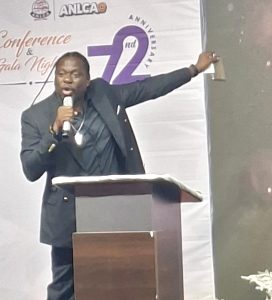
The ANLCA Vice President and Chairman of the Local Organising Committee of the 72-year anniversary, Prince Segun Oduntan, said in his welcome address that ANLCA belongs to everybody, adding that ANLCA is Nigeria and Nigeria is ANLCA.
“We are stronger together, I urge our members to let us continue to support the association so that it can continue to represent you better, protect your interests and build your capacity.
“As we celebrate today, let us continue to be one family always, let us continue to work together for peace, professionalism and progress of ANLCA and the maritime industry,” he said.
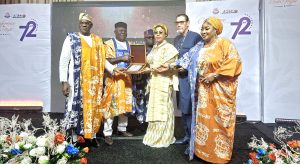
The highpoint of the event was the presentation of awards to deserving stakeholders, including retired Deputy Comptroller-General of Customs, Dera Nnadi; Queen Vicky Haastrup; and former ANLCA President Ernest Elochukwu, among others.
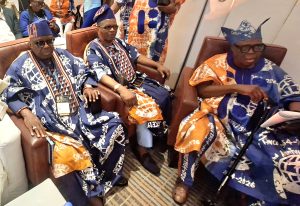
Other dignitaries in attendance included the Deputy Speaker of the Lagos State House of Assembly, Hon. Mojisola Meranda; the Comptroller-General of Customs, Adewale Adeniyi, represented by the Tin Can Island Command Controller, Compt. Joseph Anani; former ANLCA President Prince Olayiwola Shittu; members of the ANLCA board; the Registrar of the Council for the Regulation of Freight Forwarding in Nigeria (CRFFN), Kingsley Igwe; royal fathers; and other industry stakeholders.