Lekki Port Is Inheriting Apapa’s Gridlock, Omatseye Warns
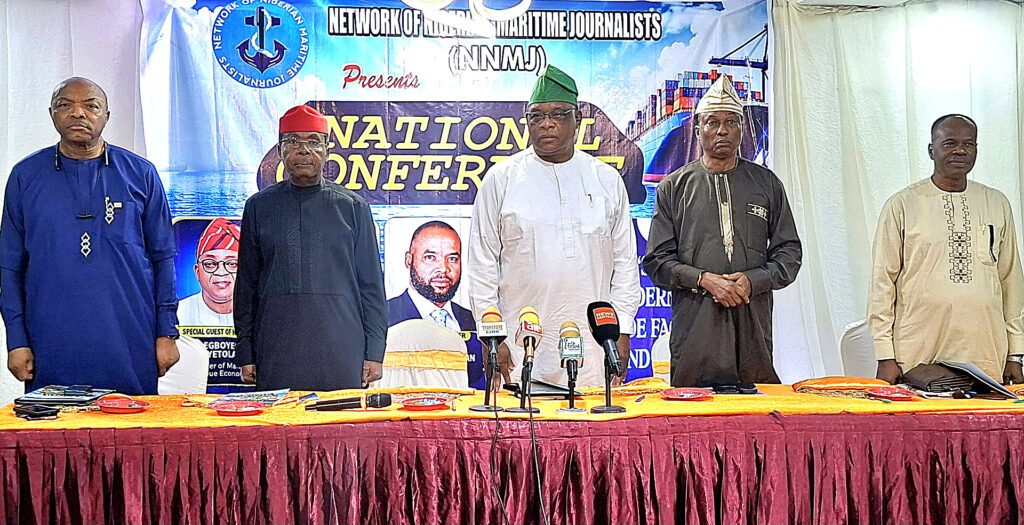
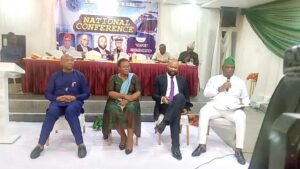
L-R: Chairman, Nigerian Ports Consultative Council, Bolaji Sunmola, Retired Assistant Comptroller-General of Customs, Charles Edike, former Director-General of NIMASA, Barr Temisan Omatseye, Chairman of NNMJ, Elder Dele Aderibigbe and President of Shippers Association Lagos State, Rev Nicodemus Odollo

—Akabogu Says Port Capacity must Expand to Support $1 trillion Economy Target by 2030
By DAPO OLAWUNI
A former Director-General of the Nigerian Maritime Administration and Safety Agency (NIMASA), Dr Temisan Omatseye, has said the traffic chaos that once defined Apapa has simply been relocated to the Lekki axis of Lagos, warning that the inefficiencies of the old port have followed cargo to the new Lekki Deep Seaport.
Speaking at the Network of Nigerian Maritime Journalists (NNMJ) Unity Conference held in Lagos on Friday, Omatseye said the daily struggle of moving around the Lekki city had become a personal ordeal, even for a short journey.
“Just to move from Marwa to Victoria Island has become a challenge, the way we used to dodge traffic in Apapa is the way we are now dodging traffic in Lekki, a truck almost squeezed me day before yesterday,” he said.
He argued that the shift of port activity to Lekki had not solved the underlying problem.
“We have successfully transferred our inefficiencies from Apapa, and relocated it to Lekki axis.
“Can the trucks not go round through Ogun State to access the Lekki Port? Do they have to come to the city centre to achieve what they want,” he asked.
He also appealed to journalists to do more investigative reporting on international best practices in port operations around the world, so that lessons from other jurisdictions could inform reforms at home.
On port modernisation, Omatseye said the Ibaka Deep Seaport in Akwa Ibom State was coming on stream, as assurances had been given by the Presidency.
However, he cautioned that the project would deliver little without supporting transport links.
“If all the cargo comes, how do we move the cargoes from Ibaka deep seaport to the North East or how do you move solid minerals from North East to Ibaka?” he asked.
He warned that failure to address such questions would deter investment in the sector. “If all these are not taken care of, investors would not see any reason to come and invest in our ports,” he said.
Omatseye’s concerns about road congestion were reinforced by the conference keynote speaker, maritime lawyer and Senior Advocate of Nigeria, Dr Emeka Akabogu, who presented a paper titled “Seaports Modernisation, Trade Facilitation and Revenue Generation under President Bola Ahmed Tinubu’s Administration.”
Akabogu disclosed that approximately 90 per cent of cargo movement from Nigerian ports depends on road transport, a situation he said places enormous pressure on port access roads, fuels congestion and undermines efficient cargo delivery.
He called for stronger rail connectivity and the development of alternative cargo evacuation channels to create a more integrated logistics system.
He warned that Nigeria’s ambition of building a 290 billion in 2025, would need to grow by about 26.8 per cent annually to reach the 1 trillion economy.
He identified a similar shortfall in general cargo. Total throughput stood at about 130 million metric tonnes in 2025 and could rise to about 230 million tonnes by 2030 if current growth persisted, but the economy’s projected expansion would require between 330 million and 442 million tonnes.
Vessel traffic showed the same gap, he said. Ship calls increased from 3,937 in 2022 to 4,477 in 2025, but the current trajectory would yield only about 5,340 annual calls by 2030, against the 10,800 to 15,300 needed.
Akabogu also pointed to prolonged vessel turnaround time as a major obstacle to competitiveness, explaining that delays raise shipping costs and the overall cost of doing business. He said the average of about five days at Nigerian ports should be cut to about 3.3 days to make the ports more attractive to international shipping lines.
He stressed the need to optimise berth occupancy, improve port connectivity and expand cargo-handling capacity, and underscored the importance of growing non-oil exports, strengthening export infrastructure and diversifying the revenue base away from crude oil.
While acknowledging recent improvements in cargo volumes and other performance indicators, he cautioned that incremental growth would not be enough. He called for sustained investment, effective policy implementation, regulatory certainty and clearly defined performance targets, and emphasised that credible industry data was essential for measuring performance, identifying infrastructure deficiencies and determining the scale of investment required.
The Chairman of the NNMJ, Elder Dele Aderibigbe, said the conference theme was deliberately chosen, stressing that the question before stakeholders was whether the nation’s ports were operating at the level required to support its economic ambitions.
He warned that countries that fail to modernise their ports risk losing cargo, investment and economic opportunities to competing maritime destinations, and called for efficient port infrastructure, faster cargo clearance, transparent procedures and effective inter-agency collaboration.
The NNMJ conference was attended by all practicing journalists in the maritime sector, as well as invited stakeholders including a retired Assistant Comptroller-General of Customs, Charles Edike, Chairman of Nigerian Ports Consultative Council (NPCC) Bolaji Sunmola as well as President of Shippers Association of Lagos State, Rev Nicodemus Odollo.