At IMION Training, LASU Don Says Nigeria Wasting 70% of Inland Waterways as Port Congestion, High Freight Costs Persist
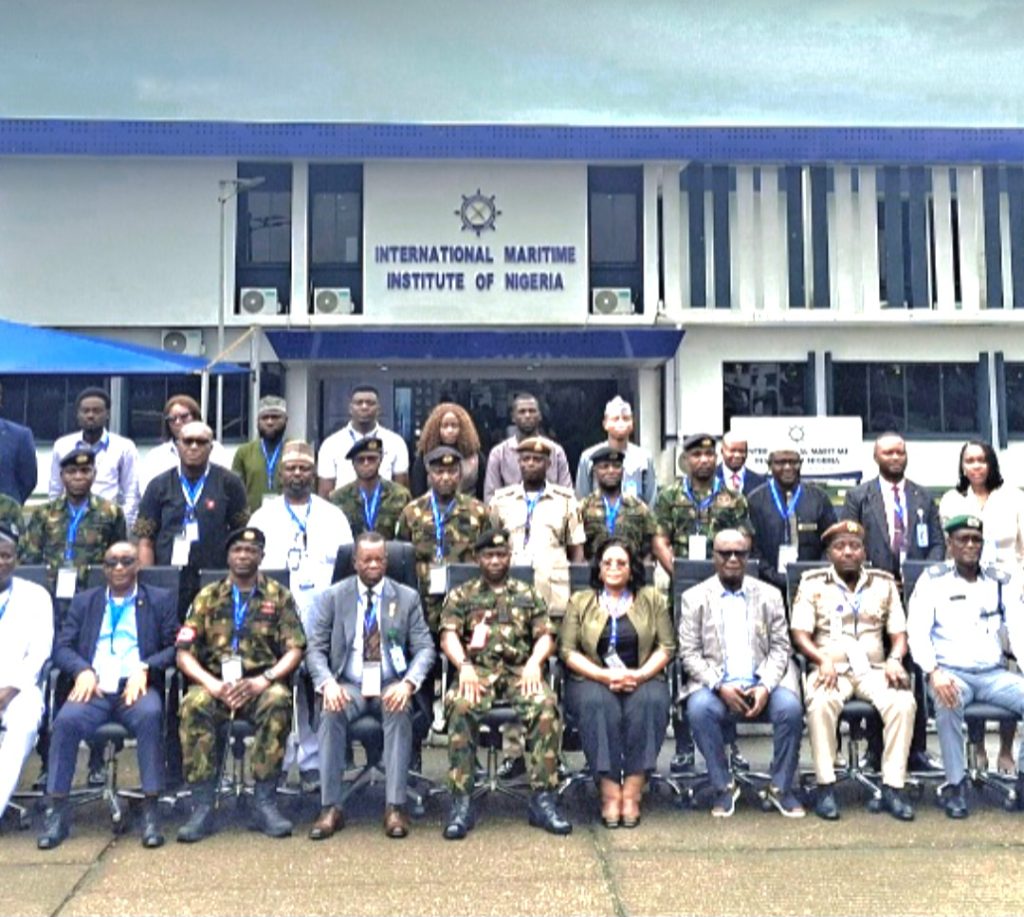
Participants at the IMION Training Course held at Naval Base Apapa, Lagos

By DAPO OLAWUNI
The Dean of the School of Transport and Logistics at Lagos State University, Prof Ogochukwu Ugboma, has decried Nigeria’s failure to harness its inland waterways, noting that only about 30 per cent of the country’s 10,000 kilometres of navigable inland waterways are actually being used, despite persistent complaints about port congestion and road haulage crises.
Ugboma made the remarks while delivering a paper titled “Foundations of Blue Economy and its Logistics Framework” at the ongoing IMION course, where she questioned why the country continues to grapple with congested ports and trailers falling on people on the roads while 70 per cent of its inland waterway network remains undredged and uncharted.
She noted that 28 of Nigeria’s 36 states are accessible by water, and that the inland waterway network links the country to five neighbouring nations; Benin Republic, Cameroon, Chad, Equatorial Guinea and Niger Republic, yet the country has failed to capitalise on this natural endowment.
The don argued that Nigeria’s port throughput is expanding faster than the capacity of the hinterland to absorb it, meaning cargo volumes that ought to move through the inland waterways are instead forced onto the roads, worsening congestion and driving up freight costs.
She linked this directly to the high cost of moving cargo within the country, recalling that industry stakeholders had previously complained that moving a container from the Lagos port to Alaba market costs more than shipping the same container to China, a claim she said was not exaggerated.
Speaking on the broader concept of the blue economy, Ugboma described it as an interconnected ecosystem spanning resource extraction, production, market access and value capture, stressing that none of these components can function in isolation.
Using fisheries as an example, she highlighted the absence of adequate cold chain infrastructure, pointing to cases where trucks conveying frozen fish break down on the road without functioning refrigeration, leaving consignments to defrost for days before they are eventually delivered and consumed.
She also raised concerns about food safety practices in the country, including the use of chemicals to ripen fruits and questionable preservation methods for items such as yoghurt and alcoholic beverages, warning that a rise in kidney-related ailments may be linked to such practices.
She called for stronger oversight involving local government authorities, who she said are better positioned to identify informal or unregistered production sites operating within their domains.