NIWA Names Tank Farms, Ship Ballast Discharge, Others as Culprits in Lagos Waterways Pollution
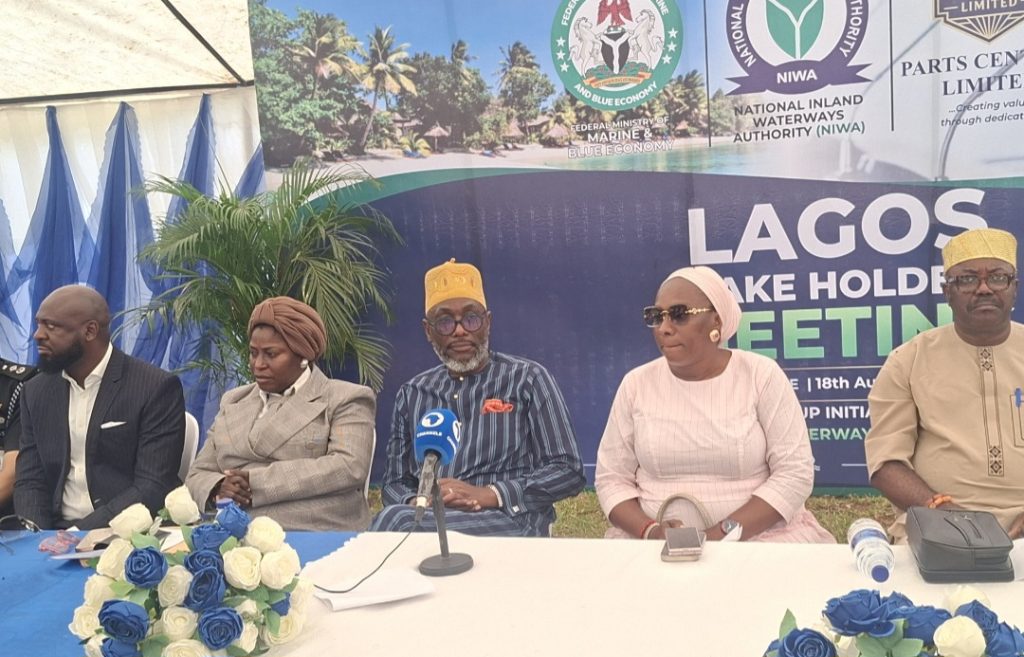
L-R: Managing Director of Parts Central Limited, Henry Olaoluwa Onifade, Lagos Area Manager of NIWA, Eng Sarat Braimah, Lagos Commissioner of Waterfronts, Dayo Alebiosu, President of NATOP, Bolaji Mustapha, and Chief Raymond Gold at the stakeholders meeting to unveil NIWA waterways cleanup initiative in Lagos on Tuesday.

By DAPO OLAWUNI
The National Inland Waterways Authority (NIWA) has unveiled Parts Central Limited as a partner in a new waterways cleanup initiative targeting Lagos State, describing the exercise as central to unlocking the blue economy and curbing environmental degradation across the state’s inland waters.
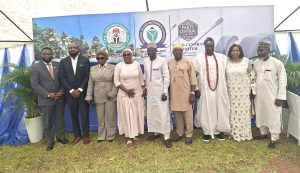
The partnership was announced at a stakeholders meeting held in Lekki, Lagos on Tuesday, where NIWA officials, Lagos State government representatives, boat operators, dredging companies, waterfront owners and traditional rulers converged to deliberate on the state of the state’s waterways.
Speaking at the event, NIWA’s Lagos Area Manager, Eng. Sarat Braimah, said the essence of the collaboration was to ensure that Nigeria’s inland waterways remain clean and safe for navigation, noting that Lagos, as a state where a third of its landmass is covered by water, had to lead by example before the initiative could be replicated in other states.
“We are unveiling Parts Central as a partner to National Inland Waterways Authority. And what they are supposed to do is to help us in making sure that the Inland Waterways of Nigeria is clean and safe for navigation,” she said.
She added that dredging companies, resident houses, and boat operators and users would be carried along through dedicated committees under the programme.
Braimah linked the cleanup drive directly to the blue economy agenda and job creation, stressing that a cleaner waterway system would ease navigation, generate youth employment, and reduce the social tensions that often accompany idle youth populations.
She lamented that many waterfront owners lacked soak-away systems and instead relied on the water to carry away their waste, a practice she said NIWA was determined to stop.
She singled out tank farm operators around Kirikiri as major culprits in the pollution of the state’s waters, describing sections of the waterway in that axis as visibly blackened by industrial waste discharge, in contrast to the naturally blue waters found elsewhere.
She called on fishermen, dredgers, waterfront developers and companies to dispose of waste properly, noting that plastic waste in particular could be recycled for economic value.
Braimah also raised concern over the growing menace of invasive water pests in Nigerian waters, a problem she said was virtually non-existent two decades ago.
She traced part of the crisis to poor regulatory monitoring, citing an instance where a ship arriving from Cotonou discharged ballast water meant only to balance the vessel, into Nigerian waters, introducing invasive species that have since become a persistent problem.
Also speaking at the event, the Lagos State Commissioner for Waterfront and Infrastructure Development, Mr Dayo Alebiosu, commended the collaboration between the state and federal government, describing the safety, cleanliness and usability of the waterways as top priorities.
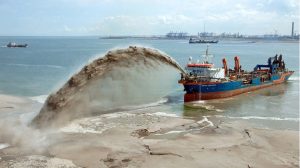
He drew attention to the environmental cost of dredging, explaining that the practice — whether for reclamation or navigation purposes — disturbs aquatic life, forcing fish and other marine species to migrate further from communities that depend on them for livelihood.
He decried illegal dredging activities involving underground pipes that endanger boats on the waterways, some of which have led to boat capsizing incidents, and called for stronger community cooperation in checking illegal dredging, noting that no community allows such activity to happen unnoticed.
The Managing Director of Parts Central Limited, Mr Henry Olaoluwa Onifade, said his company would deploy technology to capture waste across every waterfront, landing port and jetty in the state.
He disclosed that every boat and watercraft operating on Nigerian inland waterways would be required to have a NIWA and Parts Central-approved waste bin, with jetties also equipped with designated water bins for waste offloading.
He appealed to stakeholders to support the company’s agents when they visit various waterfront communities to sensitise operators and enforce compliance with the new waste disposal framework.
The stakeholders meeting was attended by representatives of the Association of Tourist Boats and Water Transport Operators of Nigeria (ATBOWATON), the Waterfront Boat Operators and Transporters Association of Nigeria (WABOTAN), and royal fathers from riverine communities, all of whom embraced the NIWA-Parts Central initiative.