£746 million Apapa, Tin Can Port Rehabilitation: Indigenous Shipowners Seek Cargo Opportunities
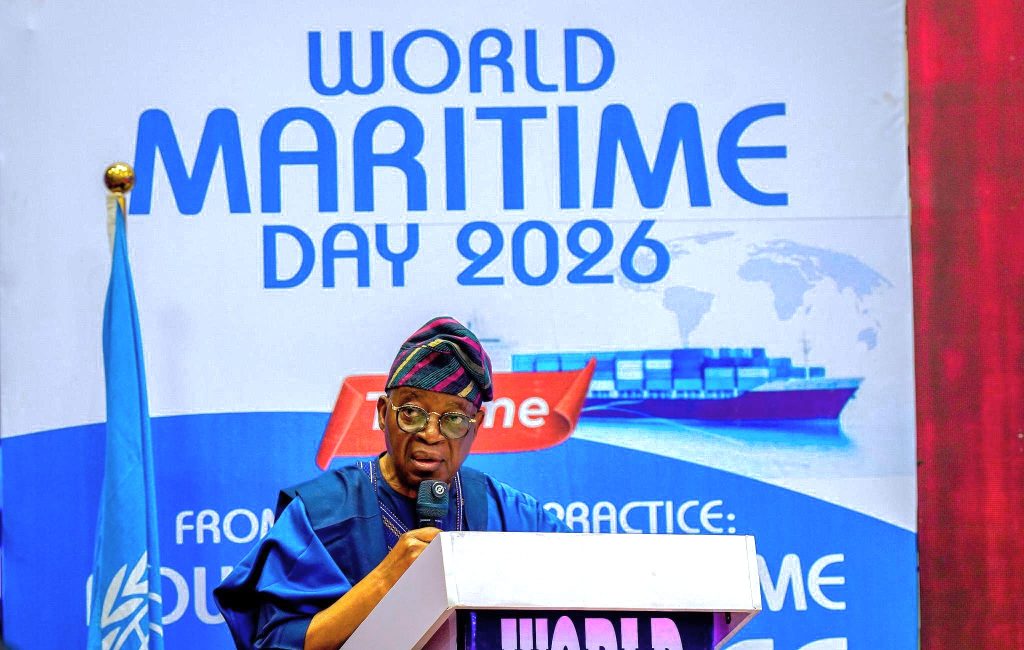
Minister of Marine and Blue Economy, Adegboyega Oyetola

By DAPO OLAWUNI
The Chairman of Starzs Group, Engr. Greg Ogbeifun, has called for the participation of indigenous shipowners in the transportation of steel and other construction materials earmarked for the reconstruction and rehabilitation of Apapa and Tin Can Island ports.
Ogbeifun, represented by Mrs Oluseyi Oluyede, made the call during a panel discussion at the 2026 World Maritime Day commemoration organised by the Federal Ministry of Marine and Blue Economy in Lagos last Friday.
Speaking on the theme, “”From Policy to Practice: Powering Maritime Excellence” Oluyede said the planned port infrastructure projects presented an opportunity for Nigeria to strengthen its indigenous shipping capacity by ensuring that local operators participated in the carriage of cargoes destined for the country.
She cited an estimated £746 million investment reportedly pledged by the British government towards improving infrastructure at Apapa and Tin Can Island ports, noting that the projects would involve British contractors and the shipment of steel valued at about £76 million.
According to her, the anticipated steel shipment represents a potential source of cargo for Nigerian shipowners, whose participation could help build local shipping capacity and expand the country’s share of maritime transportation.
“These are areas where tonnage can be built for Nigerians, indigenous operators should be given the opportunity to participate in transporting materials required for the port reconstruction projects” she said
Speaking on the disbursement of the Cabotage Vessel Financing Fund (CVFF) by the Nigerian Maritime Administration and Safety Agency (NIMASA) she argued that the availability of cargo guarantees was critical to encouraging indigenous shipowners to acquire and deploy vessels, warning that policies requiring operators to own assets without providing assurance of cargo could undermine the objectives of such policies.
“How then can you have an asset when you don’t have the cargo guarantees? We should not put the cart before the horse,” she said.
Oluyede maintained that although Nigeria had developed policies intended to promote indigenous participation in shipping, implementation gaps continued to limit their effectiveness.
She urged the government to review existing maritime policies where necessary to ensure they were practical and capable of creating opportunities for local operators.
According to her, the government and relevant stakeholders must identify cargoes available for transportation and establish mechanisms that would enable Nigerian shipowners to compete for such business.
She added that the proposed steel shipments for the Apapa and Tin Can Island port projects should be examined within this framework, rather than allowing the transportation opportunities to be dominated by foreign operators.
The Starzs Group representative also called for stronger private-sector participation in maritime policy development, urging indigenous shipping practitioners to engage more actively with the government’s Policy Advisory Committee.
She said collaboration between policymakers and industry operators was necessary to identify implementation challenges and develop workable solutions that would support local capacity development.
Oluyede further stressed that Nigeria’s participation in international maritime institutions and its position within the International Maritime Organization’s Category C framework should translate into tangible growth in the country’s shipping capacity.
She noted that the ultimate measure of progress should be the ability of Nigerian operators to deploy vessels, transport cargoes and compete effectively in international maritime trade.