At NAMM 2026 Summit, Experts Say Nigerian Ports Not Ready for Autonomous Ships
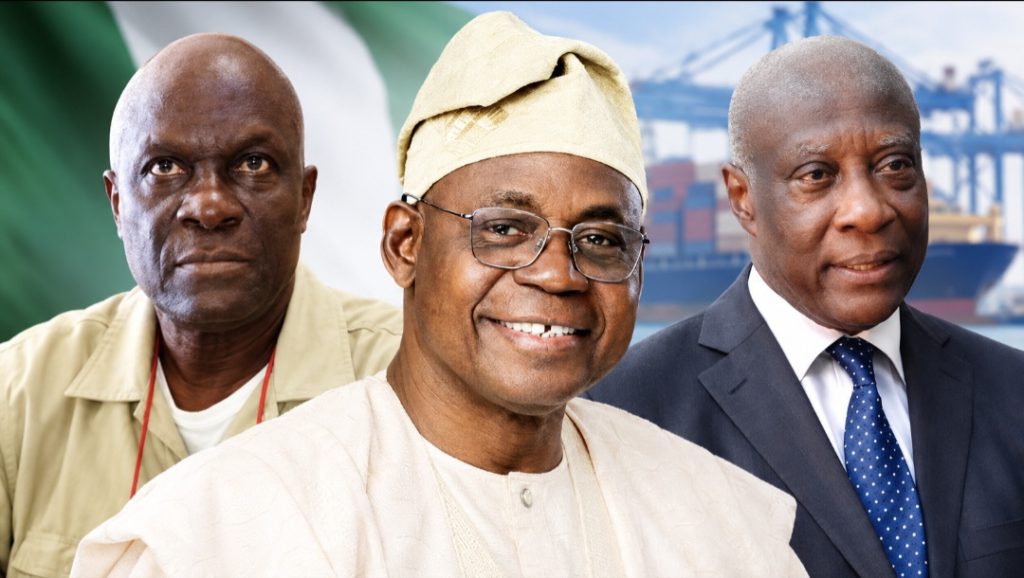
Master mariners; Capt Olugbenga Abidoye (middle) Capt Emmanuel Iheanacho and Capt Tajudeen Alao

Nigeria’s ports may struggle to handle Maritime Autonomous Surface Ships (MASS) unless urgent steps are taken on infrastructure, digital systems, institutional coordination and regulation, maritime expert, Capt. Olugbenga Abidoye has warned.
Abidoye spoke at the Annual General Meeting of the Nigerian Association of Master Mariners (NAMM) on Saturday, where he presented a paper titled “Preparing Nigerian Ports for Maritime Autonomous Surface Ships (MASS) Operations: Beyond Infrastructure to Institutional Readiness.”
He stated that Nigeria scored 1.9 out of five in a port-readiness assessment.
“The question is no longer if they will come to Lagos. The question is when they will come to Lagos,” he said, noting that autonomous vessels are already operating elsewhere.
He named four areas for preparation to include; physical infrastructure, digital systems, institutional capacity and operational procedures.
According to him, weak coordination among maritime agencies and gaps in existing rules could complicate the introduction of autonomous vessels.
He called for a review of the Merchant Shipping Act 2007, with clear procedures for emergencies, communication failures and remote vessel operations.
Pointing to the International Maritime Organization’s roadmap towards a mandatory framework for autonomous ships by July 2032, Abidoye cautioned that the timeline does not oblige every port to accept such vessels. Even so, he said, readiness would be vital to Nigeria’s competitiveness. “Readiness must be demonstrated, not declared,” he added.
In a separate paper, “Port Stimulus and Economic Growth: The Nigerian Experience,” Capt. Iheanacho Ebubeogu listed ageing infrastructure, shallow drafts, congestion, delays, cargo diversion and bureaucratic inefficiency as the biggest obstacles facing Nigerian ports.
He discussed a proposed port modernisation programme valued at about $1 billion, with proposals covering Apapa, Tin Can Island, Warri, Onne (Rivers State) and Calabar, emphasising a balanced approach that strengthens both Eastern and Western ports, alongside better channel management, improved road access, smart and sustainable port design, and growth in ship repair, dry docking and bunkering services.
Representing the Minister of Marine and Blue Economy, Adegboyega Oyetola, Dr. Bolaji Thompson said the National Policy on Marine and Blue Economy, approved by the Federal Executive Council in May 2025, targets annual sector growth of seven per cent and new jobs.
He said ministry figures show revenue rising from about N700 billion in 2023 to over N1.8 trillion in 2025, and cited more than three years without piracy in the Gulf of Guinea, ongoing rehabilitation at Apapa and Tin Can Island ports, and expanded seafarer training opportunities.
The ministry, he added, is ready to deepen engagement with NAMM on policy, training and maritime security.
Earlier, outgoing NAMM President Capt. Tajudeen Alao welcomed government representatives, heads of maritime agencies, industry stakeholders and members of the press.
In his remarks, a former Minister of Interior and Chairman of Integrated Oil and Gas, Capt. Emmanuel Iheanacho congratulated the new NAMM leadership even as he challenged the new team to outdo the impressive work of their predecessors.
He reiterated that the nation needs to move beyond policy talk to practical implementation, while commending NAMM’s role in training and mentoring maritime professionals.
The newly elected NAMM executives are; Capt. Olajide Olugunwa (President), Capt.(Dr) Michael Ogbekile (Senior Vice President), Capt. Ambrose Ojuyenum (Vice President), Capt. (Dr) Rasheed Onakoya (GeneralSecretary), Capt. Joseph Adamu-Alamba (Publicity Sec.), Capt. Olanrewaju Begusa (Financial Sec.), Capt.Steve Olabode Akintade (Asst Secretary), Capt. Benedict Ofili (Treasurer), Capt. (Barr) Ladi Olanrewaju (Legal Adviser)