Tantita Has Created over 200,000 Jobs, Improved Security in Niger Delta—Capt Waredi
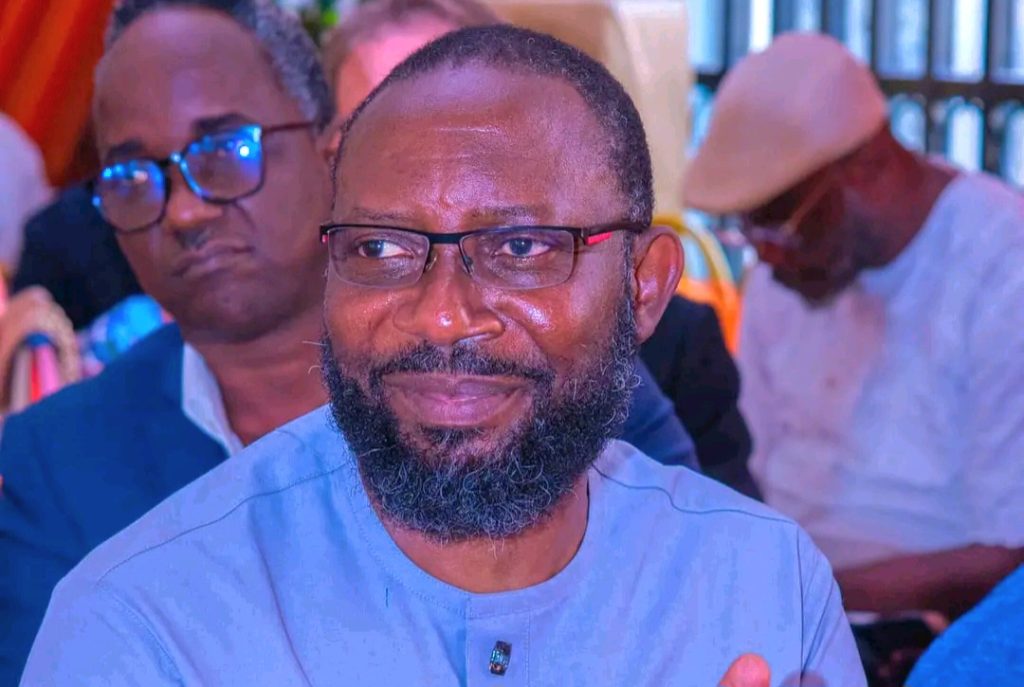
Capt Warredi Enisuoh

The Executive Director of Operations and Technical at Tantita Security Services Nigeria Limited, Capt Warredi Enisuoh has justified the multi-billion Naira pipeline protection contract awarded to the company by the Federal Government, saying that the company owned by Niger Delta warlord, Government Ekpemupolo, alias Tompolo, has created not less than 200,000 jobs and upscale the general security of the Niger Delta region.
Capt Warredi stated this in Lagos on Thursday on the sidelines of the 2025 National Discourse held at Rockview Hotel in Apapa.
DAPO OLAWUNI brings the excerpts
Do you think Nigerian ports as it were can be automated, what do you think should be done?
it’s not impossible to automate the ports in Nigeria, but we have to have a very high level of superior thinking and superior reasoning. If you look at the ports that we have, they were built quite a long time ago and for some reasons we’ve allowed even non-port activities to crowd the ports and all these people or even infrastructure or whatever would need to be resettled and that’s going to take quite a lot of commitment to do which may even make automation more expensive. As you would have realized from my presentation, automation is of three stages.
That is, the offshore, the yard automation, terminal automation and then the hinterland and all of these need to be connected.
So, the best way, if you look at it, the cheaper way to do it is greenfield, you have to embark on massive resettlement of people so that you’ll be able to have a very clear area to plan. But even if you have massive resettlement, our roads are designed in such a way that sometimes they pass through cities and you wouldn’t want to take your cargo to crowded areas, areas that they’re going to have traffic gridlock, because in automation, everywhere interlocks with each other and works interoperably because any delay in one particular section will definitely affect the other.
So, if you have traffic gridlock outside of your gate, and you are automating the inside of the port where you’re having robots stack your cargo, what happens if your cargo cannot move out and leave the port freely?
Your port and all the robots will be standing still. There’s nothing you can do about it.
So yes, we’re trying but we still have a long way to go. But the best way and easiest way to do it, as I said, is greenfield and not just greenfield, I think it will be, engaging the private sector.

Talking about greenfield, we have the Lekki Deep Seaport with modern facilities, but in terms of the movement of cargo to the hinterland, its not there. What do you think should be done in that case?
That is one of the cases where you’re forced to resettle people, maybe build more roads through places that are already residential, but you have to really entice the residents with very juicy offers so that they can move and live a better life elsewhere. That is not an impossible thing to do, it depends on how committed that you want to carry out such.
But if you bring in the private sector to look into it, do a lot of research, definitely there’s no doubt you’ll be able to achieve it. I mean, this is 2025, you’ll be able to achieve anything you want to achieve.
Sir, sometimes ago, you gave a lecture about carbon credits, and the issue came up at the last International Maritime Day 2025, Can you update us, where is Nigeria right now, and what should be done to keep up with the policy?
Okay, Nigeria has moved quite ahead. I think COP30 is coming up in Brazil now, and I think the Climate Change Commission in Nigeria has come up with a whole lot of measures when it comes to this carbon credit matter. I think they put up a very very big paper, I read some of it, probably I’ll refer you to read more of it, to kind of like enlighten us, because there are a whole lot of regulations involved in it, there are a whole lot of partnerships also involved in it.
We have to take this thing into commercial level, commercial level where the communities that are bound in these areas that are going to do all the greenhouse gas offset will benefit from it.
So yes, the country is moving in the right direction, especially the government, the current administration is very very fast with it, we have to commend them for that, the administration of President Bola Ahmed Tinubu, he’s done very well in that particular area. We need to support them, because they need a lot of encouragement and technique.
It’s a new thing that is coming up, and once new things come up there’s always the resistance to learn, because you don’t know how it is, you’re a bit worried, but it’s a very easy thing, it’s something we want everyone to keep, especially the communities, because it’s even going to help us in the oil and gas sector, it’s going to take people’s mind off the pipelines, because potentially they are rich when you have trees around you that are going to offset these things, but now we have to administratively take stock so that the communities can key-in with the federal government to achieve a common purpose and common benefit for the country.
On the issue of transshipment of goods from Lagos, why is it difficult to take vessels, or smaller craft to other parts of the country?
There are a lot of things, I don’t stand for NPA, but I’m just going to talk in terms of how maritime works. Yes, to move cargo by sea is definitely the cheapest way to do it because of the cost of heavy fuel oil and all of that, so it’s easy.
But then, if you’re going to move cargo by sea, you also have to think of where you’re moving it to next. What is your break-even point, depending or relating to the draft or the depth of the water in the area you are going to? Do you want to take two containers and keep your ship light so that you can pass through a river, or do you want to take 100 and then get stuck at the mouth of the river because your boat cannot enter?
So, there are a whole lot of feasibility studies you want to do. I remember at one particular point in time, along the River Niger, because of the insecurity, you were not even allowed to move after 6pm, I don’t know whether that particular ban has been lifted, I’m not too sure, but if you’re going to move cargo from Lagos through the River Niger up to Onitsha, you have to now make sure that you have points where you’re to stop and anchor to meet that particular requirement that you’re not allowed to sail any night.
Now, how well are your waters charted? Do you have accurate maps? Do you have accurate biometric data to know that you’re not going to run aground based on your draft or your ship conditions? I believe maybe it is something that NIWA, NPA and Shippers Council will need to come together, look at each other in the eyes and probably bring a private sector into the picture, so as to carry out an extensive research on how this can be done.
There might be areas you may need to dredge, you need buoyage systems that are going to foot those rivers for safe navigation, not just because you locally understand the situation.
Since the Dangute refinery came onboard, how has it impacted on the operations of Tantita? Has it reduced the level at which pipelines are being vandalized?
Well, if you ask me, the level of pipeline vandalism has reduced drastically, It is not solely because there’s a refinery or whether there’s not a refinery. It’s not just solely because of that.
It’s due to a whole lot of factors. Government security forces have been very supportive. That is number one.
The previous administration and the current administration also have been very, very supportive. Awareness is very great now because if you remember before the previous administration came into being on this particular project, oil theft was high, but the public did not know the extent of the damage, But now, even the public also calls us when things are going wrong.
So you see the credit goes across both.
Secondly, the socioeconomic condition of the region has also improved.
So yes, Dangute refinery has employed quite a lot of people. That will have its own effect downstream somewhere, but even within the Niger Delta, there’s a very, very massive improvement of socioeconomic activity. In fact, when I moved to the Niger Delta because of this project, it was a very, very unsafe environment back at that time. But now, you find people jogging in Warri, 2 a.m. if they so wish, and nobody’s disturbing them. The security forces are well on their lap. People are beginning to have things to do.
The pipeline project has created jobs, over 200,000 jobs, and you know if you have 200,000 people employed across various sectors in this, you know how many families you’re going to take out of poverty.
So that’s why we’ll continue to give credit to the current administration and the previous administration that made that bold decision that this project should continue.