CGC Adeniyi Says Customs to Input Nigerian Local Languages into B’Odogwu Trade Platform
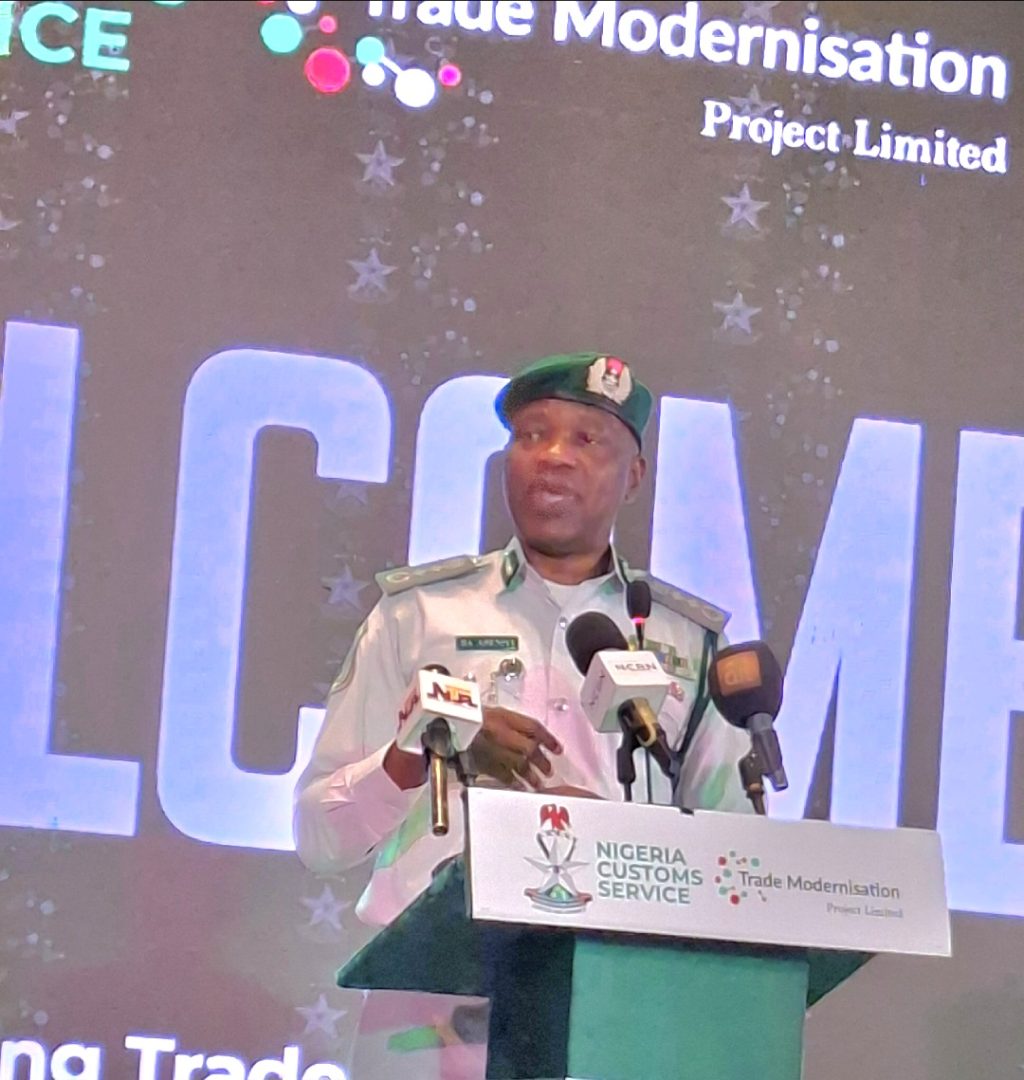
Comptroller-General of Customs, Bashir Adewale Adeniyi

By DAPO OLAWUNI
The Comptroller General of Customs, Adewale Adeniyi has announced plans by the Service to introduce local Nigerian languages, including pidgin English into the B’Odogwu trade platform in order to further ensure easy navigation and comprehension for stakeholders.
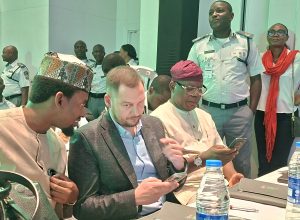
Adeniyi disclosed this at a Town Hall meeting with stakeholders on the B’Odogwu Clearance System in Lagos on Monday.
The B’Odogwu is purely, an indigenous digital platform designed by the Nigeria Customs Service to streamline its operations and enhance trade facilitation
According to the CGC, when upgraded, users of the trade platform can now choose to interact with the platform in any language of their choice and this would make it more user friendly.
Adeniyi also announced plans by the Service to reintroduce the suspended 4% Free on Board ( FOB) levy on imports
Recall that the NCS suspended the implementation of the 4% FOB in February this year following public outcry and concerns from stakeholders who argued that the levy would increase the cost of imports and negatively impact the ease of doing business .
However, speaking at the stakeholders meeting, Adeniyi said the NCS will have no choice than to re-introduce the levy in order to fund it’s technology and modernisation program, which he said is huge and crucial to enhance the NCS operational efficiency.
He clarified that the reintroduction of the 4% FOB levy will be a ‘win-win situation for everyone’ as it will lead to the complete removal of the existing 1% Comprehensive Import Supervision Scheme (CISS) and the 7% Customs collection charge.
His words, “Technology is not cheap. As we migrate from one system to the other, we make a lot of investments in technology rollouts including system upgrades and all that.
“And this is why I am telling you once again that we really don’t have a choice in the payment of the 4 percent FOB because it is needed by the Customs to fund the huge technology and modernisation programme it has embarked on.
“With the full implementation of the 4% FOB, it means the 1 % CISS will be removed. The 7 % cost of collection, which is also been charged will also be completely removed. It will be a win win situation for everybody.
“The 7% collection is taking from the federation account to administer and fund customs. What this represent is that the three tiers of government, the local government, state government and the other sub nationals are compromising 7% of what ought to go to the federation account, that’s what we have practiced in the last 10 years.
“However, under the new Act, the 4% FOB is to be paid up front, and that’s it. Once that is done, it is 100% of the revenue generated by customs that will now go to the federation accounts. So it is going to be a win-win situation for all of us.”
Adeniyi highlighted the B’Odogwu platform as a key component of the Customs modernization program, aiming to make it a global reference point for trade facilitation.
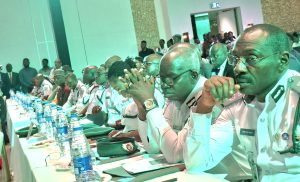
He stated that the reason for the Town Hall meeting is to give stakeholders opportunities to provide feedback on the B’Odogwu system and work to improve on it.
“We want to hear from our stakeholders their experiences with the B’Odogwu system for us to be able to assess the past success so that we can strengthen the areas where things are working well and to address areas where we needed to make adjustments. So this is why we have organized this program, which is going to be viewed around our users experience, ” he said.
Adeniyi expressed confidence that with the NCS now holding the Chairmanship of the World Customs Organization (WCO) Council, the Servce would use B’Odogwu to showcase its capacity to develop and manage indigenous technology.
“Our plan is to make B’Odogwu a reference point to trade facilitation.
So at the end, in the next two, three years, it’s going to be B’Odogwu to the world. And Nigerians will see that we have a system that can work.” he said.
Stakeholders present at the meeting lauded the B’Odogwu platform, despite acknowledging some migration challenges from the previous NICIS system and banks’ inability to make amendments on the platform.
They praised the platform’s simplicity, transparency, and zero downtime, noting that it has enhanced cargo tracking, faster generation of Pre-Arrival Assessment Reports (PAAR), and reduced clearance times.
One of the stakeholders, Gerald Mbamalu noted that precious challenges faced with ASYCUDA and NICIS 11 have been eliminated under the B’Odogwu platform.
He said agents can now comfortably transmit their PAAR from anywhere, significantly reducing down time on the B’Odogwu platform.
Representatives from various commercial banks present also attested to the platform’s efficiency, seamless user registration, and timely responses from Customs officers on enquiries.
The B’Odogwu platform was officially launched by the NCS on 23rd October 2024, starting with PTML Command as the Pilot. Since then, it has been successfully deployed across several commands including Apapa, Tin Can, Kiri Kiri Lighter Terminal, Lilypond, Lekki Free Trade Zone, Murtala Muhammed Airport and other commands across Zones A, B, and C.