An Able Seafarer in Nigeria Now Earning N1.4Million Salary—Comrade Sunday Avoseh
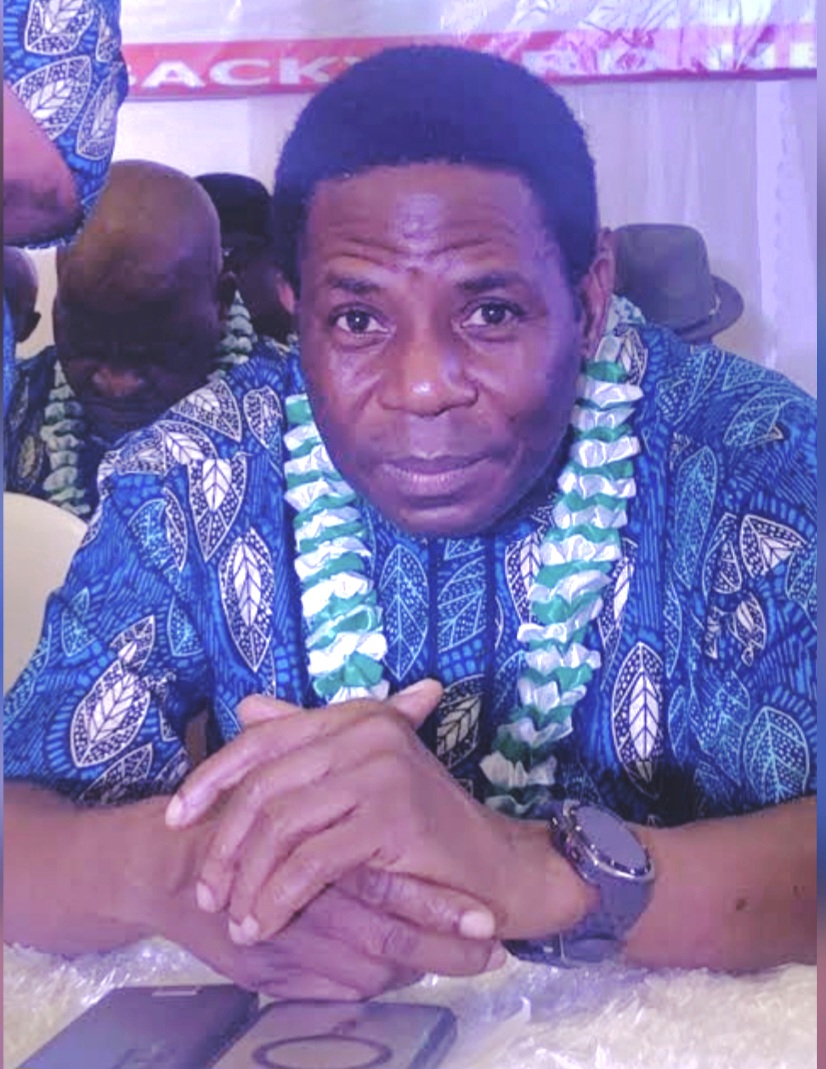
Comrade Sunday Avoseh, President, Seamen Branch of MWUN

—Says NIMASA Addressing Seafarers Discharge Booklets Racketeering with Fresh 2,500 Copies
By DAPO OLAWUNI
The Maritime Workers Union of Nigeria (MWUN) has consistently raised the bar in its fight for remuneration of Nigerian seafarers in line with global standards.
President of the Seamen Branch of the union, Comrade Sunday Avoseh in this interview on the sidelines of the 6th Quadrannial Branch Delegate Conference of the Union in Port Harcourt on Thursday stated that Nigerian seafarers are now earning salaries in line with International Labour Organization (ILO) standards.
According to him, even a junior seafarer ho is an AB onboard (Able Body Seaman) now earns not less than N1.4million wages.
Comrade Avoseh also spoke on the scarcity and racketeering of seafarers discharge booklets, saying that the Nigerian Maritime Administration and Safety Agency (NIMASA) recently printed 2,500 copies of the booklet to address shortages.
Comrade Sunday Avoseh have just been re-elected as President of the Seamen Branch for another tenure of four years in office. See excerpts of the interview.
You spoke earlier on scarcity of seafarers discharge booklets, can you tell us more about it?
The discharge book is like a record book for seafarers, it is a replica of the international passport, without it, you cannot go onboard, when you finish your article, the Captain makes a remark and you also go back to do endorsement with the shipping Master. But what we are experiencing recently is shortages of the discharge booklets, when seafarers demand for it, they will say that it is not available. Recently we had to make a strong case to NIMASA through the Shipping Master’s office and three days ago, we were told that they have printed about 2,500 copies to be distributed in all stations including Lagos, Port Harcourt and Warri.
There supposed not to be scarcity at all, the discharge booklets ought to be readily available so that whenever a seafarer approach the office of the shipping Master, they are issued, whenever there is shortages, it gives room for racketeering, the discharge booklets that is supposed to be N15,000, seafarers are paying as high is N100,000 because of the scarcity, sometimes these scarcity are even artificial.
If the discharge booklets are readily available, there would not be room for sharp practices causing inconveniences for the seafarers.
On the issue of foreigners taking over the job of Nigerians, what do you intend to do differently?
The whole essence of Carbotage is to ensure that 100% of ratings on our Carbotage vessels are handled by Nigerians. But some of the shipping companies still bring in vessels with foreigners. Just recently, about two months ago, we made that discovery with one of our companies, which I don’t want to mention, the case, as I speak, is with NIMASA.
So, there must be continuous collaboration between the trade union and NIMASA to be able to cub all these practices.
Also, on the issue of waiver, ordinarily, some of the companies hide under the guise that they are not able to get experts to handle some aspects of their vessel and as such, they write for waiver, but that shouldn’t be.
What is the first thing you have in mind to do, now that you have been re-elected into office?
Well, the first thing we intend to do is to intensify our surveillance.
You know, except there is an intelligent gathering, you may not be able to know what is happening outside the anchorage. But with our seafarers that are onboard vessels plying the coastal water, we get information from them. What we as a union need to do is to create awareness between us and our colleagues, our sailors, that anywhere they observe these kinds of practices, they should notify the office so that we can also inform NIMASA because NIMASA may not even be aware that these things are happening. It is when we give NIMASA information that jointly, we can try to intervene in cases like this.
So what we would try to do is to intensify intelligent gathering, intensify surveillance, and ensure that we also work closely with the department responsible at NIMASA.
Philippinos, Ukrainians, and what have you, cannot be coming to our water and taking the job belonging to Nigerians, there must be a collective effort to stop it.
The federal government are putting the laws in place to curb these kind of sharp practices, but enforcement is where the problem is coming from.
Tell us some of the achievements recorded in the past, during your first term in office.
God has helped us. During my four years, we’ve been able to review the global NJIC in conjunction with NIMASA and other stakeholders. Today, we’ve been able to have a minimum standard for Nigerian seafarers in this country, which is ILO standards. As it is today, I can proudly say that God has helped us. If, for instance, an AB (Able Seaman) is paid N1.4 million on coastal water, it has never happened before, a Bosun earning N1.8 million? As a matter of fact, at a forum where this was being discussed, a professor was saying, he want to resign to come and do Seafaring. This wasn’t so before, these are some of our achievements, and we’ve been able to unionise more companies. You know, my branch is a unique branch, we have a lot of potentials, and as I speak to you, we are yet to exploit 30-40% of our potentials. By the time the potentials are fully exploited, this branch is going to be buoyant and going to impact more of Nigeria so that the dream of the present government of having the highest number of maritime labor compared to the nations like the Philippines can be achieved.
We have also been able to do a lot of training for our seafarers, and then on inland waterways, we’ve been able to carry out awareness campaigns to guarantee safety in line with the coastal codes as a policy from NIWA. So, the work is vast, but we continue to do our little bit, and our prayer is that by the time we’re done in four years, we will have made posterity to judge the things we’ve been able to put in place and others coming will also do the same.