Shipowners Decry Long Vessel Waiting Time At Nigerian Ports

By DAPO OLAWUNI
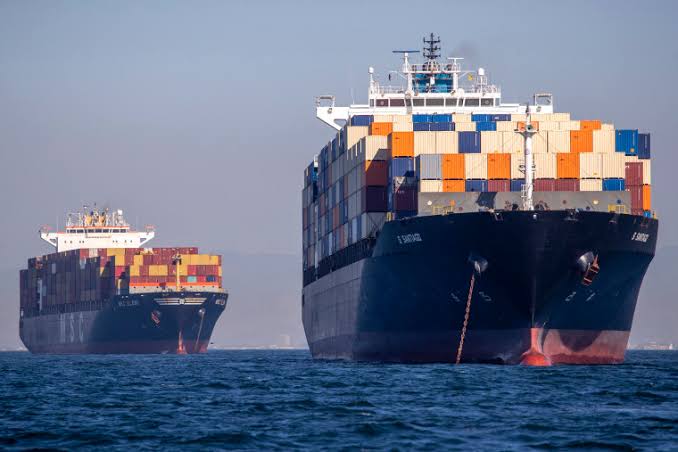
Nigerian shipowners have raised concerns on the long number of days they are made made to wait outside bar before entering Nigerian ports, and the number of days they spend when they are at berth, which according to them is not economical for business.
The Managing Director and Chief Executive Officer of Sea Transport Group, an indigenous ship owning company, Alhaji Aminu Umar raised the concerns at the just concluded Nigerian International Maritime Summit (NIMS 2022) in Lagos on Monday.
Umar raised the concerns during a panel session on the topic; “De-cabonisation and Greenhouse Gas Emissions in Shipping Regional Policy and Operational Perspectives”

Even though he did not specify the total number of days vessels are made to stay before approaching the ports, he said “Looking at the deficiency of the port, there should be a revision of the waiting time of vessels, waiting time before coming in and waiting time when you are at berth.
“In other places in the world, all these are well coordinated, I am happy that the Minister of Transportation is here present, and the Managing Director of Nigerian Ports Authority (NPA) is here present, this area needs to be looked at because there is a lot of waiting period at our ports here and it is creating so much burning of carbon.
“Vessels don’t just stay, when they are adrift, the main engines are running, even though they are not moving their engines has to be kept on, and these engines will continue to burn carbon, we have so many vessels waiting outside” he said
Aminu stated that in view of the de-cabonisation rule of the International Maritime Organisation (IMO) shipowners have come up with a plan called; Voyage optimisation plan.
“It means that if our vessel is calling at a port, we are supposed to look at the best time of arrival and be able to adjust our speed, because when the engines of the ships were designed, the higher the speed, the higher the consumption of fuel.
“So immediately the IMO came up with the de-cabonisation, all the stakeholders are now working on the optimisation plan.
“We also looked at the speed, do you go at a high speed or at an economical speed, if you are sailing from Lagos to Port Harcourt and you know your arrival time at a high speed, we all know that our ports don’t work 24hours, even if you arrive early, you would just be stationed outside the port.
“So you would have to reduce your speed, this means you would burn less fuel and your carbon emissions reduces immediately” he said
Also speaking as a member of the panel session, Chairman of Nigerian Shipowners Forum, Barr Margaret Orakwusi lamented the dumping of old vessels that has been abandoned abroad into African waters.
Orakwusi, a fishing trawler owner, also said that when foreign vessels call at Nigerian waters, there is no adequate technology to check the level of dirty diesel they are burning and emitting carbon into the maritime space.
“The AGO that we power our vessel with is highly regulated according to NNPC’s specifications, and that specification is maximum of 0.5 sulfur content. But when you talk ships operating in Nigeria, we deal on small crafts, our source of AGO is very well known and controlled, our activities are also controlled.
“We have brought in new platforms and new technologies that we can use to reduce our need to be out there when we shouldn’t be. I come from the trawling industry, we have even gone as far as changing our netting system, Introducing the use of solar energy, and our shore facilities.

“However, we need to change some of our old vessels that are consuming and becoming uneconomical to continue to use them. If big shipping companies announce purchase of new vessels, in the process of changing these vessels in order to reduce carbonization, where are these vessels buried? What we always see is that these vessels are brought into African environment.
“The regulators control our own activities, but the big vessels, when they arrive at our ports, there is no monitoring and documentation of their usage of infected AGO.
We don’t have that technology which is very expensive.
“There is need to share information and data because whatever happens here would affect everybody” she stated