Afeni Steps Up War on Smuggling, As Customs FOU ‘A’ Records N6.19bn Seizures in Four Weeks

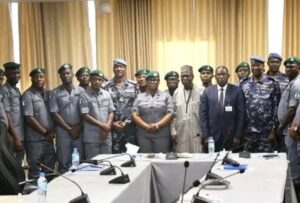
The battle against smuggling, illicit trade and economic sabotage across Nigeria’s South-West region has assumed a renewed dimension since the appointment of Deputy Comptroller Oladapo Afeni as the Acting Comptroller of the Federal Operations Unit (FOU), Zone A, of the Nigeria Customs Service (NCS). DC Afeni since appointment has intensifies enforcement operations while building strategic alliances with security and regulatory agencies to protect the nation’s economy and public safety.
Since assuming leadership of the Unit, Afeni has embarked on an enforcement drive anchored on intelligence gathering, improved surveillance, risk-based cargo examination, revenue recovery and stronger inter-agency collaboration.
The strategy is already producing significant results, with the Unit recording several interceptions of smuggling attempts involving prohibited and restricted goods with a Duty Paid Value (DPV) of N6.19 billion within four weeks of intensified operations.
From narcotics, foreign rice, frozen poultry products and counterfeit pharmaceuticals to ammunition, vehicles and endangered wildlife, the seizures reflect the diverse nature of illicit activities confronting enforcement agencies across the region.
Beyond the value of the seizures, Afeni’s approach is increasingly characterised by efforts to strengthen institutional partnerships, recognising that the fight against smuggling cannot be won by Customs acting alone.
His engagements with the National Agency for Food and Drug Administration and Control (NAFDAC), alongside sustained cooperation with the National Drug Law Enforcement Agency (NDLEA), Nigeria Police Force, Department of State Services (DSS), Nigeria Immigration Service (NIS), Nigerian Army and environmental enforcement agencies, form part of a broader strategy to disrupt criminal networks and close enforcement gaps.
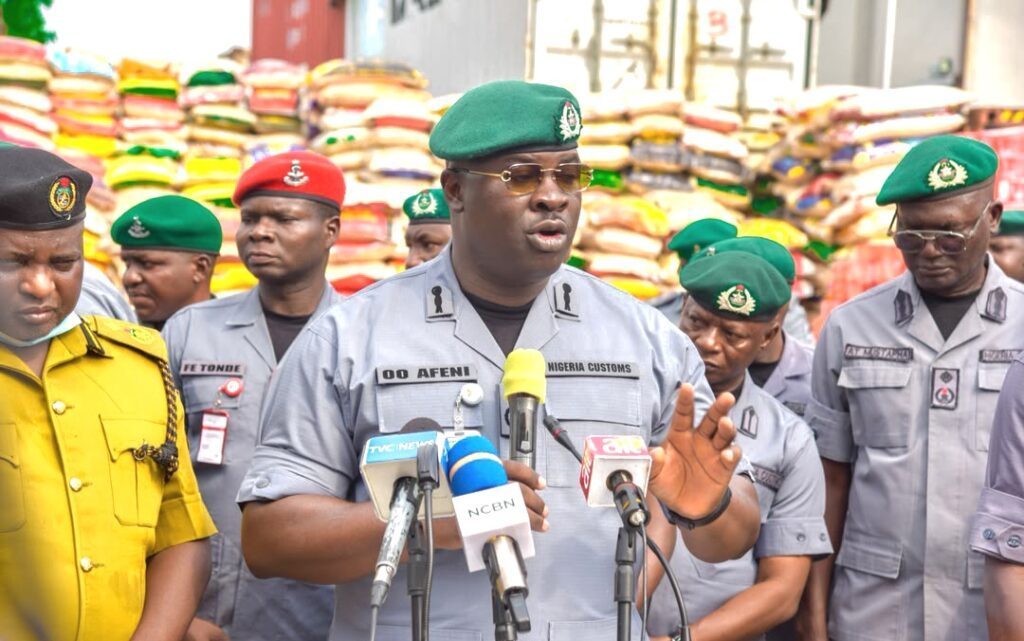
Speaking in Lagos recently, Afeni said the Unit had streamlined its internal processes, strengthened intelligence-driven enforcement, improved surveillance and enhanced risk-based examination.
He explained that the renewed operational direction was designed to suppress smuggling, protect government revenue, enforce Customs laws and safeguard Nigeria’s economic and security interests across the Unit’s area of responsibility.
“Our approach is simple: we will act professionally, enforce the law firmly, protect legitimate trade, and ensure that those who seek to undermine the nation’s economy are made to face the consequences of their actions,” he said.
N6.19bn Contraband Seizures
The first four weeks of Afeni’s intensified enforcement operations produced 195 interceptions involving goods with a combined Duty Paid Value of N6.194 billion.
The seizures included (5 trucks of rice) that is 3,028 bags of 50kg imported rice, 995 bags of 25kg rice, 104 bags of 20kg rice and 207 bags of 5kg rice.
The Unit also intercepted 5,986 parcels of cannabis weighing 3,407.83 kilogrammes, 400 grammes of cocaine, 100 grammes of methamphetamine and 57 cartons, 37 packs and six pieces of codeine syrup.
Other seized items included 173 cartons of imported frozen poultry products, 6,949 cartons of smuggled spaghetti, 459 bales and 39 jumbo sacks of second-hand clothing, 1,236 used tyres, 101 bags of imported sugar and 250 cartons of sardines without NAFDAC registration numbers.
The seizures further comprised 23,220 pieces of new machetes, 1,250 rounds of 12-calibre cartridges, 21 foreign-used vehicles, 11 means of conveyance and other prohibited items.
The volume and variety of the interceptions underline the multiple threats posed by smuggling, ranging from the undermining of local industries and government revenue to the circulation of dangerous drugs and products capable of threatening public safety.
Afeni particularly expressed concern over the interception of 23,220 new machetes smuggled without the requisite certificates and permits, warning about the potential security implications of the uncontrolled movement of such items.
He also drew attention to the growing circulation of potent cannabis varieties, noting that drug trafficking has consequences for young people, families, public health and national security.
According to him, the significance of the operations should not be measured solely by the monetary value of seized goods but by the potential damage prevented.
“We will not measure our success by how much we seize, but by how much harm we prevent,” he said.
Revenue Protection Beyond Border Enforcement
While the interception of prohibited goods remains central to the Unit’s mandate, Afeni has also placed revenue protection at the heart of his operational strategy.
The Customs boss is strengthening compliance monitoring, scrutinising import declarations, correcting under-valuation and issuing demand notices to address revenue leakages arising from fraudulent import practices.
Between September 30 and November 3, 2026, the Unit recovered N683.66 million through enhanced compliance checks and other enforcement measures.
Afeni attributed the recovery to improved risk profiling, stricter compliance checks, targeted examination of questionable declarations, teamwork and collaboration with relevant stakeholders.
He assured importers, licensed Customs agents and members of the trading public that the Unit would continue to distinguish between legitimate trade and fraudulent practices.
According to him, compliant businesses would receive the necessary facilitation, while attempts to evade duties, falsify declarations or undermine national security would not be tolerated.
The approach reflects the broader economic implications of smuggling, which include revenue losses, unfair competition against local manufacturers and the proliferation of unregulated products in the Nigerian market.
Building Alliances Against Fake Drugs
One of the clearest demonstrations of Afeni’s partnership-driven enforcement strategy was his visit to the Investigation and Enforcement Directorate of NAFDAC in Apapa, Lagos.
During the visit, he reaffirmed FOU Zone A’s commitment to supporting the agency in its campaign against counterfeit and substandard pharmaceutical products across the South-West.
The engagement focused on strengthening information sharing, coordinated enforcement and joint operations against criminal networks involved in the importation, warehousing, distribution and sale of fake and substandard medicines.
Afeni described counterfeit products as a serious threat to public health and national security, stressing that the responsibility of protecting Nigerians from unsafe products should not be left to one agency.
“Your work requires the collective support of everyone for you to succeed, because every single fake product that finds its way into the public poses a serious threat to our society. We are here to support you, and I assure you that our doors are open to you,” he said.
The Director of NAFDAC’s Investigation and Enforcement Directorate, Dr Iluyomade Martins, welcomed the engagement, noting that the existing Memorandum of Understanding between both organisations provides a framework for cooperation in enforcing relevant laws.
Martins stressed the importance of sustaining the partnership through effective information sharing and coordinated operations to dismantle criminal networks involved in the illicit trade of counterfeit and substandard products.
The renewed commitment is expected to strengthen the agencies’ capacity to identify suspicious consignments, track distribution networks and prevent prohibited pharmaceutical products from reaching consumers.
For Afeni, the NAFDAC partnership represents an important extension of Customs enforcement beyond the interception of goods at points of entry and along smuggling routes to addressing the wider supply chains through which illicit products reach the public.
Pangolin Interception Extends Enforcement To Wildlife Protection
Afeni’s enforcement strategy has also extended to the protection of endangered wildlife, demonstrating the broader environmental dimension of Customs operations.
On November 8, 2026, operatives of FOU Zone A intercepted six pangolins at Eruwa-Oni in Oyo State during an intelligence-led patrol.
The interception occurred at about 3 a.m., when the suspected handlers abandoned the animals and fled upon sighting the Customs patrol team.
All six pangolins were recovered alive and transported to the Unit’s headquarters in Ikeja, Lagos. However, two died on arrival, while four survived.
The animals and the two carcasses were subsequently handed over to relevant wildlife officials for documentation and further action.
The handover was conducted by the Deputy Comptroller, Enforcement, A.O. Oguntuase, on behalf of Afeni.
The interception highlights the importance of inter-agency cooperation in addressing environmental crimes, particularly the illegal capture, transportation and trafficking of protected wildlife species.
It also reinforces the need for Customs to work with relevant wildlife and environmental authorities to ensure that seized animals receive appropriate care and that suspected offenders are investigated.
The Unit has called on members of the public to provide credible and timely information that could assist in identifying individuals involved in the illegal exploitation of endangered species.
A Coordinated Front Against Economic Sabotage
Beyond its engagements with NAFDAC and wildlife officials, FOU Zone A has sustained collaboration with several security and regulatory institutions, including the NDLEA, Nigeria Police Force, DSS, Nigeria Immigration Service, Nigerian Army and National Environmental Standards and Regulations Enforcement Agency (NESREA).
The partnerships are designed to strengthen intelligence sharing, facilitate joint operations, improve enforcement coordination and ensure that intercepted goods and suspects are transferred to agencies with the appropriate statutory responsibilities.
Under the arrangement, narcotics and suspects intercepted by Customs are handed over to the NDLEA for further investigation and possible prosecution, while other prohibited products are transferred to relevant regulatory agencies.
The strategy recognises that smuggling networks often operate across multiple locations and exploit gaps between agencies responsible for border management, security, public health and trade regulation.
Consequently, coordinated intelligence and joint enforcement activities are expected to make it more difficult for criminal operators to move prohibited goods through alternative routes or distribute them through established commercial networks.
Afeni has pledged to deepen these relationships through intelligence sharing, joint operations, capacity building and coordinated enforcement.
He said the collective objective was to dismantle criminal networks, protect borders, secure communities and defend the national economy.
Warning To Smugglers, Assurance To Legitimate Traders
As enforcement operations intensify, Afeni has issued a clear warning to individuals and networks involved in smuggling and other forms of illicit trade.
He maintained that the Unit would remain vigilant and continue to disrupt illegal supply chains, intercept prohibited consignments and ensure that offenders face the consequences of their actions in accordance with the law.
“Smuggling thrives where it is tolerated, protected, or ignored. Every citizen has a role to play by reporting suspicious activities and supporting lawful trade,” he said.
He also urged stakeholders and members of the public to support the anti-smuggling campaign by providing credible information that could assist enforcement agencies in identifying suspicious activities.
For legitimate importers and businesses, however, his message is that the intensified operations will not be used to frustrate lawful commercial activities.
Rather, the Unit intends to maintain a balance between trade facilitation and strict enforcement against fraudulent practices.
Afeni also acknowledged the policy direction and support of the Comptroller-General of Customs, Bashir Adewale Adeniyi, saying the institutional backing had continued to strengthen the Unit’s operations.
Sustaining The Momentum
The N6.19 billion worth of seizures, N683.66 million revenue recovery, interception of endangered wildlife and renewed partnership with NAFDAC provide an indication of the operational direction under Afeni.
However, the long-term impact of the strategy will depend on the ability of the Unit and its partner agencies to sustain intelligence-led operations, identify the financiers and organisers of smuggling networks, secure successful prosecutions where evidence supports them and prevent seized products from being replaced through alternative supply routes.
The challenge is particularly significant in the South-West, where the scale of commercial activities and the movement of goods require sustained coordination among Customs, security agencies and regulatory institutions.
Afeni’s strategy therefore goes beyond increasing the volume of seizures. It seeks to build a coordinated enforcement structure in which intelligence, surveillance, revenue monitoring and institutional partnerships reinforce one another.
For smugglers and economic saboteurs operating across the region, the message from FOU Zone A is that enforcement will remain intensified.
For government agencies, the renewed engagements signal a commitment to closer cooperation in protecting public health, securing communities, preserving the environment and safeguarding the Nigerian economy.