Tin Can Island Port Gridlock Returns with a Vengeance!!!
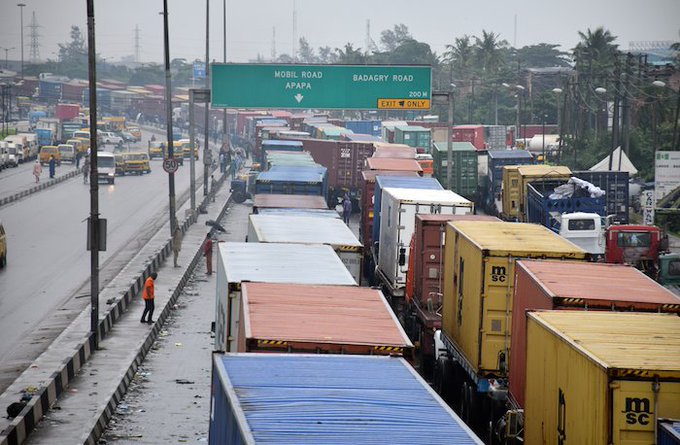
File photo of traffic gridlock on Mile 2-Tin Can Port axis

By DAPO OLAWUNI
Two years after the perennial gridlock and illegal trailer parking along the Mile 2-Tin Can Port axis were cleared in March 2024, fresh indications have shown that the gridlock is back with vengeance.
DAILY TREND investigation at the Tin Can Port on Friday afternoon revealed that container trucks and petrol tankers have taken over three lanes of the port access, while other motorists are restricted to a single lane.
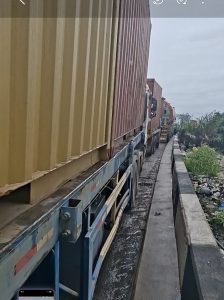
According to our correspondent, not less than three trucks also broke down between Coconut bus stop and Tin Can Island first gate, thereby compounding the traffic gridlock. The gridlock was further compounded by absence of traffic officers to ensure free flow of vehicles.
Recall that in 2024, a joint enforcement operation initiated by the Nigerian Ports Authority (NPA) and the Lagos State Government had dislodged articulated vehicles and removed illegal checkpoints along the Tin Can port after several years of chokehold by non-state actors.
Sources informed our correspondent that the traffic was compounded because the Nigerian Ports Authority (NPA) is yet to renew the contract it entered into with operations of the electronic call-up system, known as ETO.
The Eto platform is managed by Truck Transit Park Limited (TTP).
Meanwhile, critical stakeholders in the port systems have started expressing grief over the return of the notorious and infamous Tin Can gridlock.
Founder of National Association of Government Approved Freight Forwarders (NAGAFF) Dr Boniface Aniebonam in a chat with DAILY TREND urged the management of NPA not to allow a vacuum, and should renew the contract for Eto Call-Up System.
“Over the years as founder of NAGAFF, experience have thought me that, taking a bad decision is better than taking no decision at all. The NPA Managing Director should not be afraid of making up his mind. I know that the DSS and other security agencies at the port must have notified government of the return of the traffic” he said
Dr Aniebonam observed that the cause of the gridlock was coming directly from inside the Tin Can port. He urged the Federation government to swing into action and not allow the situation to fester.
“I have personally experienced it this week, immediately you drive passed the port entrance, you realise that the road becomes free again. I am sure the relevant authorities are aware of what is causing the traffic” he said
Speaking with journalists recently, National Publicity Secretary of Association of Nigerian Licensed Customs Agents (ANLCA) Emmanuel Onyeme attributed the gridlock to refusal of MSC Shipping to evacuate it’s empty containers from the port.
According to him, the port is currently congested with MSC empty containers, even as he alleged that the shipping line call Nigeria with shiploads, but return empty without equivalent number of empties or export containers.
We are having a critical issue that could lead to port congestion, MSC Shipping vessels come to Nigerian Port with 1000 containers and leaves with only 500, leaving a deficit on the port, they are making Nigeria a dumping ground.
“This week has been hectic. To move a container of vehicle from TICT Terminal or Five Star Logistics Terminal to a warehouse in Tincan is N500,000. After this, it takes you two weeks to return the empty container. Daily you are being charged on the empty container.
“This is situation is now stressing the port corridor, trucks are now queueing up on the access road, the holding bays are full” he said
Corroborating the ANLCA Image Maker, National Secretary of Association of Maritime Truck Owners (AMATO) Mr Mohammed Bala Sanni, said that Truck drivers are refusing to pick up any container belonging to MSC Shipping.
“If you load MSC containers, you would lose revenue. MSC shipping are not deploying ships to receive their empty containers. All the terminals are telling us there is no space” Bala said
The boycotting, coupled with the returned traffic gridlock has since led to a sharp hike in haulage costs.