
BREAKING: Reps Pass State Police Bill, Amend Constitution to Pave Way for Reform

—See Major Provisions of the Bill
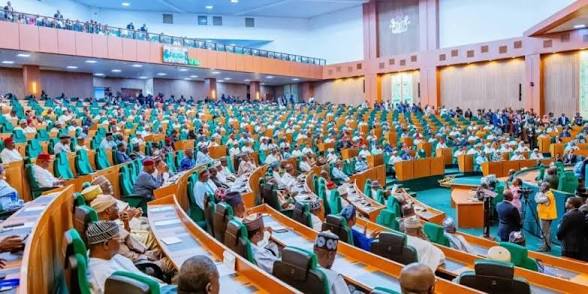
The House of Representatives on Thursday passed a constitutional amendment bill to establish state police nationwide.
The passage marks a significant step in Nigeria’s long-running debate over decentralising policing and tackling insecurity.
The bill, titled “A Bill for an Act to Alter the Constitution of the Federal Republic of Nigeria 1999 to Provide for the Establishment of State Police; and for Related Matters (Sixth Alteration) Bill, 2026,” was approved during consideration at the Committee of the Whole, presided over by Speaker of the House, Tajudeen Abbas.
The voting commenced after the Deputy Speaker and Chairman of the House Committee on Constitution Review, Benjamin Kalu, presented arguments in support of the proposal and urged lawmakers to back the measure.
The exercise was conducted manually, with members raising their hands to indicate their positions.
At the end of the count, about 288 lawmakers voted in support of the bill, while four members voted against it.
The proposed amendment seeks to fundamentally restructure policing in Nigeria by creating both Federal and State Police formations.
One of the key provisions of the bill alters Section 214 of the Constitution to establish the Federal Police and State Police formally.
Under the proposal, the National Assembly would be empowered to prescribe the structure, organisation, administration and powers of the Federal Police, while also providing the framework and guidelines for the establishment of state police services.
The bill stipulates that no state police formation shall commence operations unless it is established through a law passed by the relevant State House of Assembly and certified as meeting national minimum standards prescribed by an Act of the National Assembly.
It further provides that until a state police force becomes operational, the Federal Police will continue to perform policing functions in that state.
The amendment also seeks to limit federal interference in the operations of state police.
Under the proposal, the Federal Police may only intervene in a state’s internal security affairs in cases of a complete breakdown of law and order, upon the request of a governor, or where a state police force becomes unable to function due to administrative, financial or other challenges.
The bill also proposes significant changes to the appointment and command structure of the police.
Under the amended Section 215, the Inspector-General of Police would be appointed by the President on the advice of the National Police Council from among serving members of the Federal Police, subject to confirmation by the National Assembly.
Similarly, a State Commissioner of Police would be appointed by a governor on the advice of the National Police Council from among serving members of the State Police, subject to confirmation by the State House of Assembly.
The proposal empowers governors to issue lawful directives to State Commissioners of Police on matters relating to public safety and order.
However, where a commissioner believes such directives are unlawful or inconsistent with accepted policing standards, the matter may be referred to the National Police Council, whose decision would be final.
The bill also amends Section 84 of the Constitution by replacing references to the “National Police Council and the Federal Police Service Commission” with the “Nigeria Police Council and the Police Service Commission.”
The proposal, however, will still require approval by the Senate and endorsement by at least two-thirds of the State Houses of Assembly, assented to by the President before it can become part of the Constitution.
Source: Guadian