WABOTAN Bemoans High Cost of Water Transportation, Say It Costs N10,000 to Commute from Badagry to CMS Daily

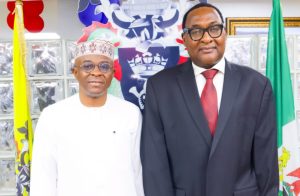
Comrade Babatope Fajemirokun, National President of WABOTAN and Chief Executive Officer of SIMTOP

The President of the Waterfront Boat Owners and Transporters Association of Nigeria (WABOTAN), Mr. Tope Fajemirokun, has decried the high cost of water transportation in Nigeria, warning that the financial burden on commuters is discouraging passengers from embracing the waterways as a viable alternative to road travel.
Speaking on Villa Square, a special segment of Cr8tive Naija — the popular weekly tourism and cultural magazine programme aired every Thursday on Mainland 98.3 FM Lagos and anchored by veteran tourism journalist Frank Meke alongside Bunmi Bade Adeniji — Fajemirokun painted a stark picture of the economic reality facing water transport users.

“The cost of water transportation remains high. For example, a commuter travelling from Badagry to CMS may spend about ₦5,000 each way, amounting to ₦10,000 daily on transportation alone. This is one of the major factors discouraging passengers from using the waterways. That is why we are appealing to government at all levels to invest more in the sector,” he said.
Fajemirokun attributed the soaring fares partly to rising fuel prices, which he said have significantly affected the operations of boat owners and transporters. He noted that the increase in fuel costs, coupled with prevailing economic challenges, has made it difficult for operators to acquire new boats and expand their businesses.
“When you are in business, you must continue to improve and invest in it despite the challenges,” he said.
Speaking on the need to phase out unsafe banana and wooden boats, Fajemirokun called for greater government intervention and financial support for operators seeking to invest in safer and more modern vessels.
“The Federal Government needs to come to our aid, just as the Lagos State Government has been doing. Eliminating banana and wooden boats will be easier if government provides the necessary support and investment. State governments should also invest more in water transportation to ensure that Nigerians can fully benefit from the opportunities offered by the waterways,” he said.
Veteran maritime journalist Frank Meke, who also spoke on the programme, acknowledged government efforts but stressed that more needs to be done to unlock the full potential of Nigeria’s water transportation system.
“Our roads are heavily congested. As we speak, Apapa remains gridlocked. Imagine the impact if government invested more in water transportation. Sometimes, there appears to be more lip service than concrete action. The blue economy holds enormous potential. Look at the investments and sacrifices being made by associations like WABOTAN to strengthen the sector. Government agencies should demonstrate a similar level of commitment,” Meke said.

He also expressed concern about states such as Kwara, Niger, Benue, and Taraba, where waterways could serve as a more affordable and efficient means of transporting agricultural produce, noting that many farmers in those states need reliable and cost-effective transportation options to move their goods to market.
Meke called on the government to declare a state of emergency in the water transportation sector, emphasising the need for alternative modes of transportation beyond road networks.
“Nigerians need efficient alternatives to road transport, and WABOTAN has played a significant role in advancing the sector. Government should provide soft loans to boat operators to enable them to acquire modern vessels. Investment should not be limited to boats alone; there is also a need for continuous training of boat captains, crew members, and even passengers. As the rainy season approaches, we must prepare adequately for emergencies,” he stated.
On safety, Fajemirokun commended the National Inland Waterways Authority (NIWA) and the Lagos State Waterways Authority (LASWA) for their continued collaboration in ensuring safer and more secure waterways across the country, and outlined several initiatives undertaken by WABOTAN to educate its members ahead of the rainy season.
“Since the beginning of the year, we have been educating our members on safety measures. We have conducted two safety induction programmes this year and are currently planning another one before August. With the support of my friend and brother, Frank Meke, the programme will bring together stakeholders, the media, and regulatory agencies to further strengthen safety awareness,” he stated.
He noted that LASWA recently invested significantly in clearing water hyacinth, a fast-growing aquatic plant that obstructs navigation and poses safety risks from Lagos waterways, and said WABOTAN has enjoyed strong cooperation from both LASWA and NIWA in promoting safety and regulatory compliance.
“We have received tremendous support from LASWA and NIWA, and we are working closely with them. However, we remain particularly concerned about Rivers and Bayelsa States, where incidents on the waterways tend to increase during the rainy season due to their proximity to the Atlantic Ocean. With NIWA’s support, we are intensifying sensitization efforts in those states and across other parts of the country,” he said.
He added that several states are establishing their own waterway authorities and commended NIWA for providing guidance and support in that regard.
Fajemirokun concluded by urging all boat operators to prioritise safety at all times and ensure that passengers wear life jackets before embarking on any journey.
“Safety must always come first. Boat operators and passengers should never neglect the use of life jackets, regardless of the distance of the journey,” he advised.