Capt. Ladi Olubowale Warns: Without Marine Assets, Africa’s Seaport Boom Benefits Foreign Interests

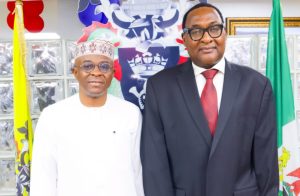
Capt Ladi Olubowale

By Dapo Olawuni
As African nations, including Nigeria, commit billions of dollars to deep seaport development, the absence of strategic national and regional marine fleets risks allowing foreign shipping interests to capture a disproportionate share of the value generated by African trade, logistics, and maritime services.
This is the central warning from Captain Ladi Olubowale, Executive Director of Seamate Maritime Integrated Services Limited, who argues that infrastructure investment alone cannot secure Africa’s maritime future, and that the continent’s real economic battle will be fought over the ownership of marine assets.
“As Africa accelerates the development of deep seaports and industrial trade corridors, a more strategic question is emerging beyond infrastructure investment: Who will control the marine assets powering Africa’s trade economy?” Olubowale said in a statement titled “Africa’s Deep Seaport Boom: Why Strategic Marine Assets Will Define the Continent’s Economic Future.”
Across the continent, governments are channelling significant capital into maritime infrastructure. From ongoing deep seaport expansion in Nigeria to port modernisation projects in Ghana, Senegal, Angola, Namibia, Kenya, Tanzania, and South Africa, Africa is entering what Olubowale describes as potentially the most transformative maritime era in its modern history. Yet he cautions against mistaking construction activity for maritime strength.
“No nation becomes a maritime force simply by constructing terminals and dredging channels. Maritime dominance is built through ownership and control of the strategic assets that sustain trade movement, vessels, coastal shipping systems, offshore support fleets, inland waterways logistics, marine engineering capabilities, cargo distribution networks, and integrated supply chain operations. This is the defining challenge facing Africa’s maritime future,” he stated.
Olubowale drew lessons from established maritime powers, noting that Singapore, the UAE, China, Norway, Greece, and South Korea did not achieve dominance through infrastructure spending alone. Their strength, he argued, emerged from private sector operators who strategically invested in marine assets, shipping capacity, industrial logistics systems, and trade-linked maritime ecosystems.
“The real economic value in maritime trade is not merely in the port infrastructure itself. It lies in controlling cargo movement,” he said.
Olubowale expressed particular concern about Africa’s capacity to meet the marine asset demands that will be generated by two major continental developments: the implementation of the African Continental Free Trade Area (AfCFTA) and the expanding industrial operations of the Dangote Group.
“Today, Africa stands at a similar crossroads. The implementation of the AfCFTA is reshaping continental commerce. Simultaneously, industrial projects led by African champions such as the Dangote Group are redefining regional manufacturing, energy distribution, and industrial supply chains,” he said.
The scale of these transformations, he added, will generate unprecedented demand for coastal cargo movement, refined petroleum distribution, offshore marine support services, bulk commodity transportation, regional logistics integration, industrial marine supply operations, and strategic shipping support infrastructure.
Despite these opportunities, Olubowale warned that much of Africa’s maritime transport ecosystem remains externally controlled. Foreign shipping lines continue to dominate cargo movement, international marine service operators remain deeply embedded across offshore operations, and large segments of the continent’s logistics architecture still depend heavily on imported operational capacity.
“This dependence creates long-term economic vulnerabilities,” he cautioned.
On the path forward, Olubowale identified a fundamental flaw in Africa’s traditional approach to maritime development — an overreliance on regulatory frameworks at the expense of private sector investment.
“For decades, maritime conversations across Africa have focused predominantly on regulation, compliance frameworks, cabotage policies, and institutional reforms. While regulation remains important, no maritime industry in history has been built by regulation alone. Regulators create frameworks. Private sector operators create industries,” he stated.
He called for a structural shift driven by access to maritime financing, long-term infrastructure partnerships, vessel acquisition support, industrial logistics opportunities, strategic public-private collaboration, and consistent investment protection policies. Africa, he argued, requires indigenous maritime companies capable of building integrated marine logistics systems, strategic tanker and coastal fleet operations, offshore support infrastructure, port-linked industrial supply chains, inland waterways transportation networks, maritime intelligence and safety systems, and regional marine asset management capabilities.
Drawing a parallel with the Dangote Group’s transformative impact on Nigerian industry, Olubowale said the maritime sector requires the same bold, long-term investment thinking from indigenous operators and African investors alike.
“As deep seaports expand, the countries and companies that position themselves around marine transportation, trade logistics, offshore operations, and regional cargo systems will become the true beneficiaries of Africa’s economic rise.
This is where indigenous maritime companies must begin to think beyond traditional agency operations and transactional shipping services. Critically, it also requires African investors to recognise maritime assets as strategic economic infrastructure rather than simply commercial shipping ventures,” he said.
He warned that without strong indigenous maritime participation, Africa risks financing infrastructure that ultimately strengthens foreign trade dominance rather than building continental economic sovereignty.
“Africa’s deep seaport expansion is occurring at a moment when the continent has a rare opportunity to reposition itself within global trade architecture. However, infrastructure alone will not secure Africa’s place. The strategic ownership of marine assets will,” Olubowale submitted.