Container Blocking: Why Leadership Tenure Matters at Nigeria’s Maritime Police Command

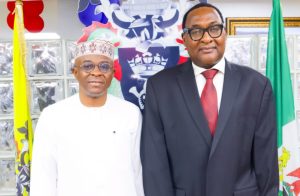
Inspector General to Nigeria Police Force, Kayode Egbetokun

By DAPO OLAWUNI
Nigeria’s maritime industry stands at a critical juncture. As the nation works to position its ports as competitive regional trade gateways, stakeholders are identifying opportunities to enhance the effectiveness of the Maritime Police Command, a vital security component of the port ecosystem.
The conversation centers on a key structural issue, which is the frequent rotation of Assistant Inspectors-General of Police (AIGs) heading the Maritime Police Command, and how this affects the command’s ability to develop sustainable partnerships with other port stakeholders.
Over the past two years, clearing agents and freight forwarders have consistently raised concerns about operational challenges affecting cargo clearance processes. Recall that in September 2023, Alhaji Tanko Ibrahim, the National Coordinator of NAGAFF’s 100% Compliance Team, highlighted the scale of the challenge during a protest at Apapa port, reporting that over 1,800 containers were detained at Lagos ports.
“We recognize that ports are sensitive areas, that’s why we have been more open to dialogue and deliberations instead of protests,” Tanko had stated, emphasizing the industry’s preference for collaborative solutions.
Also recently at the 10th Annual Seminar for Maritime Journalists in Lagos in December 2025, Alhaji Ayokunle Sulaiman, Senior Special Adviser to the National President of ANLCA, provided specific data on the impact of interception of dully cleared cargo by the maritime police.
According to him, “If you have a vessel of 1,000 containers, about 200 of them would go through Shippers Council and Maritime Police interceptions, thereby taking the importer a minimum of four days of demurrage. This four days delay cost us not less than ₦100 million and the total cost goes back to the masses”
Speaking at the same event, Dr. Kayode Farinto, former Acting President of ANLCA, noted that “The Port Police has an observer status on examination of cargoes, but here we are now, about three percent of cargoes is being stopped by Police”
In the same vein, Alhaji Femi Anifowose, ANLCA Western Zone Coordinator in heat of the controversy in December 2025,
called for dialogue, saying that “We are calling on the Minister of Marine and Blue Economy to call a stakeholders meeting between the Shippers Council, the Association, and the Shipping companies, let’s have a dialogue.”
Meanwhile, the Maritime Police Command has consistently maintained that its operations are grounded in legitimate security concerns. At a stakeholders meeting organized by the Nigerian Shippers’ Council on 19th December 2025, ASP Adebayo Rasheed, Public Relations Officer of the Maritime Police Command, explained that “The Police cannot stop blocking containers, especially those with intelligence reports, considering the insecurity in the country”
Adebayo also sited recent discoveries of containers carrying arms and tramadol which has already escaped various checks by other port agencies.
Following allegations of collaboration with Maritime Police, the Nigerian Shippers’ Council swiftly convened the stakeholders meeting of December 19th 2025 where Dr. Pius Akutah, Executive Secretary of the NSC, categorically denied any collaboration with police to hinder trade and exonerated council staff from extortion. The NSC has since scheduled follow-up meetings to continue dialogue between all stakeholders.
It is worthy of note that, a promising precedent exists under Barrister Hassan Bello, who served as NSC Executive Secretary from 2013 to 2021 (eight and a half years).
Bello successfully negotiated a Memorandum of Understanding with a former AIG Maritime Police, Pius Imue, establishing protocols for container interceptions.
This represented the kind of sustainable framework that long-term leadership can achieve. The challenge has been maintaining such agreements across leadership transitions.
Based on available records, the Maritime Police Command has experienced significant turnover in recent time.
AIG Olofu Adetutu Rhoda assumed duty in November 2023 as the 20th AIG Maritime Police Command, serving approximately 14 months. AIG Chinedu Oko led the command through portions of 2025 into January 2026, serving roughly 12-14 months. AIG Okunade Ronke Nurat currently serves as the 24th AIG Maritime Police Command, having assumed duty in January 2026.
The fact that Nigeria has had 24 different AIGs since the command’s establishment suggests a pattern affecting institutional continuity.
Stakeholders across the maritime industry are converging on several constructive proposals. The first is establishing extended leadership tenure with a minimum two to four-year commitment, which would enable development of institutional knowledge, building of trust-based relationships with stakeholders, and implementation of sustainable policies.
This aligns with tenure stability enjoyed by heads of Nigerian Ports Authority (NPA), NSC, and Nigeria Customs Service Zonal Coordinators.
There’s also the proposal to consider appointing Commissioners of Police rather than AIGs to the Maritime Police Command, since CPs typically have longer service ahead before retirement and can commit to multi-year strategies.
There is need for the police hierarchy to take a cue from the Nigeria Customs Service which reserves area commands for officers with at least two years remaining in service, a standard that could be adapted for Maritime Police Command.
Also, establishing a minimum service-remaining requirement of at least 24 months for Maritime Police Command appointments would ensure officers have adequate time to implement reforms and reduce rapid turnover.
Additionally, developing clear Standard Operating Procedures for information sharing between Customs, Maritime Police, and terminal operators would create consistency, building on the successful MoU model pioneered during Barrister Hassan Bello’s tenure.
The incoming National Single Window Project presents a unique opportunity to leverage technology through digitized intelligence sharing, transparent container tracking systems, and clear audit trails for all interceptions.
Apart from the foregoing, institutionalizing quarterly stakeholder forums involving Maritime Police Command leadership, Nigerian Shippers’ Council, ANLCA and NAGAFF representatives, Nigeria Customs Service, terminal operators, and shipping companies would enable proactive problem-solving.
The Maritime Police Command serves a vital national security function. The question is how to structure the command for maximum effectiveness while supporting Nigeria’s economic growth through efficient trade. Collaboration is needed from government leadership including President Bola Tinubu, the Minister of Police Affairs, the Minister of Marine and Blue Economy, and the Inspector-General of Police to convene stakeholder summits, commission comprehensive reviews, and develop phased implementation plans.
Nigeria’s maritime sector generates substantial revenue and employs hundreds of thousands of people. The country’s strategic location on the West African coast offers enormous potential for regional trade leadership. The proposed reforms to Maritime Police Command leadership tenure represent one piece of this larger puzzle. When combined with the National Single Window Project, enhanced stakeholder engagement, and technology integration, they can contribute to a transformed maritime sector.
As Nigeria moves forward with ambitious plans for port modernization and the National Single Window Project, ensuring that all participating agencies have the structural foundation for sustained excellence is essential for national competitiveness. The path forward requires dialogue, data-driven decision-making, and a shared commitment to Nigeria’s maritime future. This is an opportunity to build something better together.