SEC Reviews Draft Rules on Online Forex, CFD Trading as AFTE ends in Nigeria

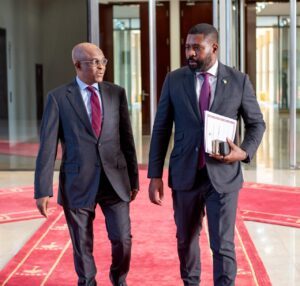
Director of Derivatives, Commodities and Risks Management, Nigeria’s Securities and Exchange Commission, Daiyabu Kurfi (second left), and others during the Africa Forex Trading Expo 2026 organised by Azelia Expo Ltd in Lagos

In line with stakeholder submissions, Nigeria’s Securities and Exchange Commission (SEC) is reviewing its draft rules on online forex and CFD trading to ensure safe practice, the Director of Derivatives, Commodities and Risks Management, Daiyabu Kurfi, has said.
Kurfi, who represented the director-general at the second Africa Forex Trading Expo (AFTE) in Lagos, said the proposed framework sets out which entities must register, what they may do, and what they owe customers, just as it also addresses cross-border arrangements and offshore operators whose activities target Nigerian residents, subject to applicable law.
Speaking on the theme, “Africa’s Digital Finance Revolution: Trading, Technology and Opportunity,” SEC warned that “accessibility should not be confused with safety, and technological sophistication should not be mistaken for investment quality.”
It cautioned that being able to open an account and place a trade does not mean a person understands leverage, costs or the possibility of losing the entire amount invested.
The commission said its approach rests on five priorities: a clear framework for market participation; fitness, competence and financial soundness; transparency and fair treatment of clients; protection of client funds and effective complaint handling; and effective supervision and enforcement.
Urging investors to treat claims of guaranteed profits or high returns with little or no risk with considerable caution, to verify any platform’s regulatory status through the SEC’s official channels, and to be wary of unsolicited offers, it stressed that registration “is not a substitute for ongoing supervision.”
SEC also set out five calls to action for operators, including building compliance into business models from the outset; and putting investor interests at the centre of product design and distribution.
Others are investing in cybersecurity and market-integrity technology; strengthening cooperation between industry and regulators; and developing African expertise and institutions.
In his address, the Director of Azelia Expo Ltd, Zack Kiratu, said the industry’s growth must come with responsibility, listing financial literacy, unrealistic expectations, inadequate risk management, questionable marketing practices and consumer protection as issues to be confronted.
According to Kiratu, whose company organised the expo, “a bigger market is important, but a more credible market is even more important.”
He identified innovation, trust and opportunity as the three elements that must work together to shape Africa’s digital financial markets, and urged the continent to move from being a consumer of financial products to an active participant in designing them.
Meanwhile, Kiratu expressed confidence that, with increased mentoring and discipline, the teeming population of young Africans in forex trading could master the market structure and trade profitably.
He explained on the sidelines of the event that AFTE provides a platform for physical meetings, noting that though a large population engages with the markets online, there was a lack of a central point where all the players could meet.
According to Kiratu, “humans are wired to build trust through physical interactions, and as much as we are advancing technologically, there is that need for physical interaction. So that was just one of the reasons.
He added that the expo used experts to demystify forex trading and digital assets to clear the misinformation, likening forex trading to gambling rather than the viable business that it is.
Also, the presenting sponsor, FundingPips, Hassan Chattha, said its mission is to close the gap between trading talent and access to capital, citing over $330 million in payouts, over three million traders and a presence in over 195 countries.
Presenting the figures, the proprietary trading firm said five Nigerian traders alone had received nearly half a million dollars in payouts.
However, it equally told Nigerian traders to observe restraint, stating that “hustle gets you into the game. Discipline keeps you in the game,” adding that traders do not need to win every trade but need to survive, manage risk and stay consistent.
Also, workshops and masterclasses alongside the main programme reinforced the same theme, with Exinity (FXTM) client education specialist Pius Ogbu’s “From Strategy to Execution” centred on the distinction between a trading plan and a trading strategy, and on defining entry, stop-loss, target, and trade-management rules in advance, among others.
For his part, the founder and lead coach at Spark FX Academy, Citadel Egigba, disproved the scam misconception about forex trading. Emphasising adequate training before trading, he told people to take trading as a profession and, by implication, to understand the system first.
Noting that every business, just like forex trading, has gains and losses, warned that “if you do not understand the structure of the market and have not gone through the learning process, you would probably think it’s a field where all the grounds are green always.”
In the meantime, the Business Development Manager at FXTM, Inahoro Rachel, said proper regulation and education were necessary to close the gaps in the understanding and practice of forex trading, as well as women’s participation.
Noting that over 10 per cent of about 1,000 traders that she had interacted with in the past seven years were women, Inahoro stressed that basically, the financial space has to be demystified to clear popular misconceptions of forex trading as gambling or a quick money-making venture.
She listed cultural and financial impediments among women’s limitations in the business, as many believe it is the duty of their husbands to provide for the home, rather than take charge of the family’s finances.