AFRIDEX 2026: Deep Blue Project Upgrades Assets with VTOL Drone, Armoured Vehicle to Boost Maritime Security

By DAPO OLAWUNI
The Deep Blue Project has upgraded its assets with new surveillance technology, unmanned aerial vehicles (UAVs), an armoured vehicle and tactical equipment.
The upgrades are meant to strengthen Nigeria’s maritime security operations and curb illegal activities in the country’s territorial waters.
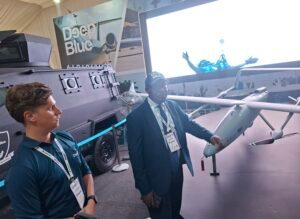
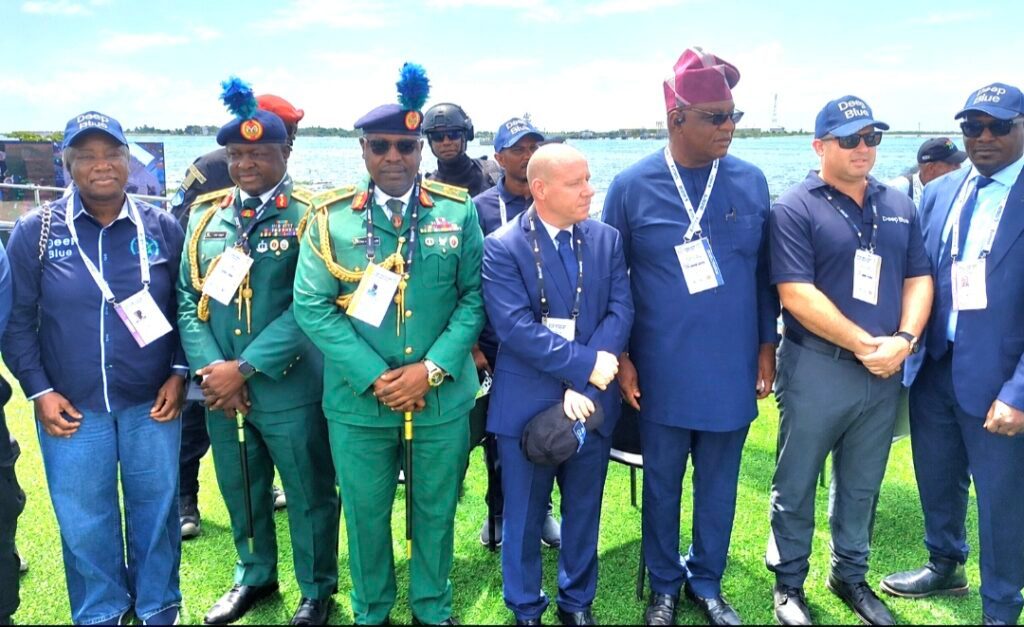
Tal Spektor, Chief Executive Officer of HLS International, presented the equipment at the Africa International Defence Exhibition (AFRIDEX), held on Tuesday at the Eko Atlantic City in Lagos.
HLS International is the technical partner to the Nigerian Maritime Administration and Safety Agency (NIMASA) on the Deep Blue Project.
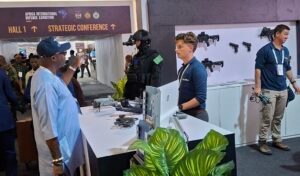
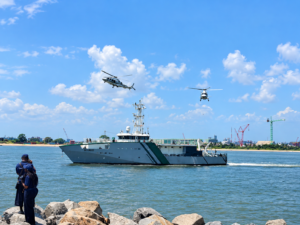
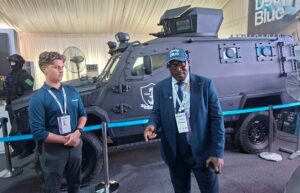
Among the assets displayed were a light utility vehicle for bush and land operations, a vertical take-off and landing (VTOL) UAV, a newly delivered armoured vehicle and tactical equipment for the project’s special operations unit.
According to Spektor, the VTOL drone can take off and land vertically, enabling it to operate from vessels at sea or from land and provide surveillance information by day and night.
He noted that the tactical UAV system had been used in different operations over the past two years, adding that continuous technological upgrades were necessary to maintain operational effectiveness against evolving maritime threats.
The armoured vehicle, he said, would support special forces deployed to different operational environments, while the tactical equipment on display included night-vision devices, uniforms, arms and ammunition.
He added that recent upgrades to the project’s intelligence systems had improved its ability to monitor cargo movements and provide information relevant to NIMASA and other government agencies.
The project’s Command and Control Centre enables authorities to monitor vessels travelling from different parts of the world into Nigeria’s Exclusive Economic Zone (EEZ), providing information on vessel ownership, International Maritime Organization (IMO) identification numbers, Automatic Identification System (AIS) status and other intelligence needed to track maritime movements and identify suspicious activities.
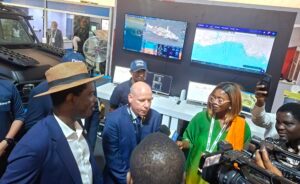
Operated under the supervision of the Federal Ministry of Marine and Blue Economy in partnership with the Ministry of Defence, the project provides comprehensive maritime security through intelligence gathering, surveillance and coordinated enforcement operations.
Spektor stressed that maritime security operations must extend beyond the sea because illegal activities offshore often have links to activities on land.
“Any illegal activity at sea will always start from the land, the importance of strengthening the operational capacity of personnel working under the Deep Blue Project,” he said.
He said the project’s responsibilities extend beyond combating piracy, militancy and the trafficking of arms and ammunition. It also supports efforts to tackle illegal fishing, protect Nigeria’s marine environment, enforce maritime regulations and safeguard government revenue.
He warned that illegal fishing undermines the livelihoods of coastal communities, while the unauthorised dumping of hazardous waste into the sea could damage marine ecosystems, threaten fish stocks and expose Nigerians to environmental and health risks.
Effective surveillance and enforcement, he added, could help ensure that vessels operating in Nigerian waters comply with applicable laws and regulations.
Spektor also linked maritime security to the country’s economic interests, noting that improved enforcement could strengthen confidence in Nigeria’s maritime environment and support the financial interests of relevant government agencies.
He said the benefits were not always immediately visible to the public, but could influence the safety of goods transported by sea, the cost of maritime insurance and the broader conditions for international trade.
The HLS International chief executive also highlighted what he described as significant improvements in Nigeria’s international maritime standing, attributing the progress to coordinated efforts involving NIMASA, the Ministry of Marine and Blue Economy, the Ministry of Defence and other security agencies.
He said the gains had contributed to Nigeria’s removal from international maritime blacklists and red lists, as well as its successful election into Category C of the IMO Council.
He further cited the lifting of American sanctions after 12 years as part of the wider developments he associated with improvements in Nigeria’s maritime and security environment.
Describing the Deep Blue Project as an example of cooperation between civilian institutions and security agencies, Spektor argued that effective maritime governance requires joint operations, reliable intelligence and regular investment in modern technology. He said the Ministry, NIMASA and other security agencies were working together to advance Nigeria’s maritime development and strengthen enforcement across the maritime domain.
He reaffirmed HLS International’s commitment to supporting Nigeria’s maritime security objectives through technology, training and operational assistance.
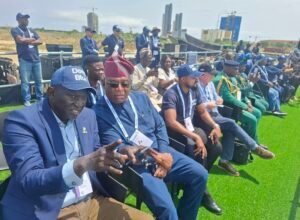
The exhibition drew senior military generals and other prominent stakeholders in the maritime sector.
A major highpoint was the demonstration of the tactical and operational capabilities of the special forces working under the Deep Blue Project, as well as the Deep Blue assets.