What new Sierra Leone Ocean Shipping Company means for Nigeria – Capt Olubowale
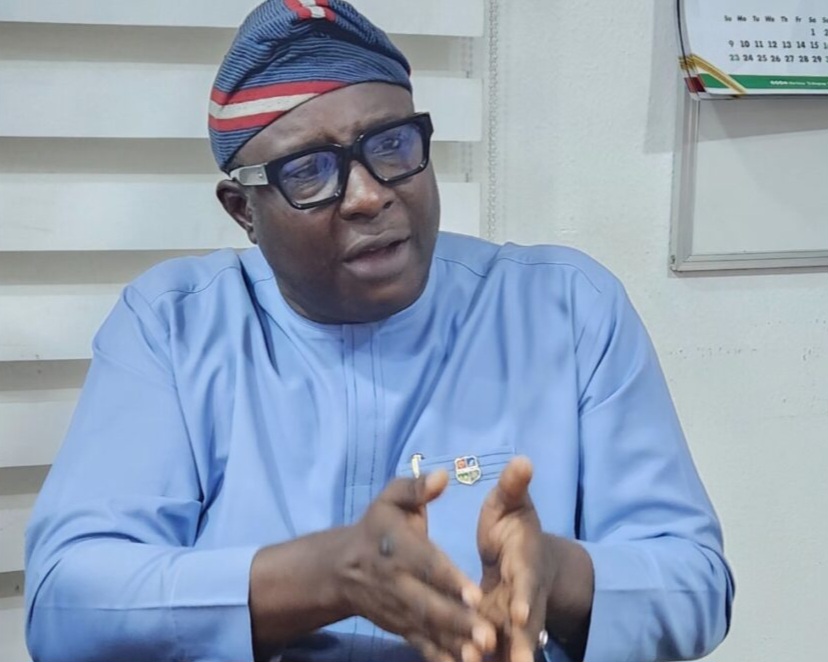
Capt Ladi Olubowale

Shipping operators in Africa have been excited by the official launching of the Sierra Leone Ocean Shipping Company (SLOSCo) by President Julius Maada Bio, describing this as a vista of hopes that Africa can claim its rightful place on the world’s sea lanes.
The shipping operators also said the Sierra Leone Ocean Shipping Company (SLOSCo) is a clear statement that Sierra Leone would no longer watch its trade sail away on other nations’ ships.
Captain Ladi Olubowale, the immediate past President of Africa Shipowners Association (ASA), Nigeria, stated this in a media interaction in Lagos where he examined what the shipping lines, SLOSCo, means for Nigeria.
Commending the government of Sierra Leone for the courage to float the shipping lines, Captain Ladi Olubowale, Group Managing Director of Seamate Maritime Services Limited, said Sierra Leone has shown vision and resolve, and has given the whole of West Africa, particularly Nigeria, reason for optimism.
“Let me begin by warmly congratulating President Bio, the Government and people of Sierra Leone on this landmark achievement. Particular credit is due to the Minister of Transport and Aviation, Ambassador Alhaji Fanday Turay, the leadership and staff of the Sierra Leone National Shipping Agency, and the members of Parliament who ratified the agreement that made SLOSCo possible. They have shown vision and resolve, and they have given the whole of West Africa reason for optimism. On behalf of colleagues across the African shipping community, I wish SLOSCo fair winds and a long, successful voyage.
“In my years in African shipping, including as President of the Africa Shipowners Association, I have watched many national shipping ventures launched with ceremony. Some became fleets. Most became footnotes. The difference was never the size of the country or the scale of the ribbon-cutting. It was strategy, discipline and the will to see a plan through to the end.
“That is why SLOSCo matters to Nigeria. And it is why it should matter to every African government that still treats shipping as someone else’s business,” said Captain Ladi Olubowale.
Olubowale said SLOSCo did not just happen overnight but through deliberate processes – partnership, effective law put in place by the Parliament of Sierra Leone, and launch.
According to him, “Sierra Leone’s achievement did not happen by accident or by press release. It followed a clear sequence of decisions.
“In 2025, Parliament passed the Sierra Leone National Shipping Agency Act, which converted the old Sierra Leone National Shipping Company, founded in 1972, into a new agency with authority to act as the country’s national carrier for international trade. The new agency took over the assets and liabilities of the old company and the earlier national carrier venture.
“In August 2026, Parliament ratified a joint venture agreement between that agency and Zhejiang Xiehai Group, a Chinese firm, creating SLOSCo. Two months later, the President cut the ribbon.
“Law, then partnership, then parliamentary approval, then launch. Each step was public, and each step was finished before the next began. SLOSCo’s real test, of course, is still ahead: whether it can win cargo, run efficiently and survive commercial pressure. But Sierra Leone has started. That alone puts it ahead of Nigeria.”
On the continent, he said many African countries are now counting the costs being lost to foreign vessels carrying their cargo as many are now working towards establish their own national shipping lines. He pointed out that owing national shipping lines is not just a question of national pride but a question of who controls Africa’s trade.
“SLOSCo is not an isolated event. Across the continent, governments are waking up to the cost of owning almost none of the ships that carry their trade. South Africa is working to establish its own national carrier, its first since Safmarine passed into foreign hands. Coastal states from Morocco to Kenya are pouring money into ports.
Captain Olubowale said “The gap they are trying to close is enormous. Africa is home to almost a fifth of humanity, yet its share of the world’s merchant fleet is tiny. According to the UN trade body UNCTAD, Nigeria is Africa’s largest ship-owning nation, and even Nigerian-owned vessels account for just over half of one per cent of the world fleet by value.
“This is not just a question of national pride. It is a question of who controls Africa’s trade. The African Continental Free Trade Area promises to multiply commerce between African economies. But a free trade area means little if goods moving from Lagos to Freetown, or Abidjan to Durban, still travel on foreign-owned ships, often routed through hubs in Europe or Asia. When freight rates spike, as they did when Asia–Africa contract rates more than doubled in 2022, African importers and consumers pay the price with no say in the matter.”
Recollecting that Nigeria once had a proud national carrier – the Nigerian National Shipping Line (NNSL) of about 30 ocean-going vessels and trained a generation of Nigerian seafarers, Olubowale, however, said the cost of the collapse of the shipping lines was huge.
“The cost of that collapse has been enormous. Industry estimates put Nigeria’s annual loss in freight earnings to foreign shipping companies at between eight and nine billion dollars. Every year, the cargo of Africa’s largest economy is carried by others, and the value goes with it,” Olubowale said, recounting efforts of the government in refloating yet another national shipping lines, not at a zero level, but in partnership with major shipping organizations in the world.
“To be fair, the Federal Government is moving. In April, the Minister of Marine and Blue Economy, Adegboyega Oyetola, announced “significant progress” toward refloating a national carrier, with interest from DP World and AD Ports Group. These are serious partners, and the ambition is welcome. But Nigerians have heard similar promises before, from several administrations. Until a vessel flies the flag of a Nigerian national carrier, the announcement remains an announcement.
“And Nigeria is not starting from zero. Its indigenous owners already hold the continent’s largest fleet, which UNCTAD counted at 291 vessels. The Lekki Deep Sea Port has given the country a modern deep-water gateway. On security, the Deep Blue Project has helped turn waters once described as among the most dangerous in the world into a success story; the minister says Nigeria has recorded no piracy incidents in its territorial waters in four years. Nigeria has the assets. What it has lacked is follow-through,” he said.
He expressed displeasure that 23 years after the enactment of the Cabotage Vessels Financing Fund (CVFF), which is meant to finance ship acquisition by indigenous shipowners, the fund is yet to be disbursed.
“If Nigerians want to know whether a new national carrier will succeed, they should look at the Cabotage Vessel Financing Fund (CVFF).
“The fund was created under the Coastal and Inland Shipping (Cabotage) Act of 2003. It is financed by a two per cent surcharge on contracts in Nigeria’s coastal trade, and its purpose was simple: give indigenous shipowners low-interest, long-term loans to buy vessels, so that Nigerians could build, man, own and flag their own ships.
“For more than 20 years, that money sat unused. By last year, the fund was estimated at about 700 million dollars. Successive governments promised to release it. A former transport minister even claimed presidential approval for disbursement before leaving office, and nothing followed.
“This administration has done more than its predecessors. An application portal opened in January 2026, with an initial 25 million dollars made available. The number of participating lending banks was raised from five to 12. In September, President Bola Tinubu approved disbursement.
“Yet the numbers tell a sobering story. By the minister’s own account in September, NIMASA had received 92 applications. Of these, 20 had been passed to the lending banks, and only one had been reviewed and forwarded for final approval. Earlier, in May, an industry research group noted that no beneficiary had publicly confirmed receiving funds. Just last week, the minister again directed NIMASA and the banks to speed up the process.
“Twenty-three years after the law was passed, Nigerian shipowners are still waiting for vessels the fund was meant to buy.
“This matters for the national carrier debate. A national shipping line does not stand alone. It depends on a healthy base of indigenous shipowners, Nigerian crews, local ship repair yards and banks that understand maritime finance. The CVFF was designed to build exactly that base. If Nigeria cannot move money it already has into the hands of its own shipowners, it is fair to ask how it will run a national carrier that must compete with the world’s largest shipping companies.
“The human cost is just as real. Through the Nigerian Seafarers Development Programme, NIMASA has trained thousands of young Nigerians in nautical science and marine engineering. Many then hit the same wall: they cannot get the sea time they need to qualify, because Nigeria has too few ocean-going ships to train them on. This month, the Ijaw Youth Council said more than 100 cadets sponsored over a decade ago are still waiting to complete their certification. Every vessel the CVFF finances, and every ship a national carrier puts to sea, is a classroom for these young officers. Without the ships, the training is money spent on a promise,” said he.
On the way out for Nigeria, Olubowale urged the Federal Government to treat shipping as national strategy, not a business line; sequence the reforms and finish each one; make deadlines binding for the disbursement of the CVFF, build trust through transparency – NIMASA should publish every approved CVFF beneficiary, the amounts disbursed and the vessels acquired; and govern the national carrier like a world-class company as “the NNSL did not fail because Nigerians could not run ships. It failed because politics was allowed to run the company.”
He also encouraged Nigeria to think beyond national flags but considering a West African shipping alliance.
Olubowale said “Here is where Nigeria could lead rather than follow. Instead of every coastal state building a small national carrier that struggles alone against global giants, West Africa should build a shipping alliance.
“The logic is simple. Nigeria has the cargo volumes that make routes profitable. Smaller states like Sierra Leone have new carriers, willing partners and strategic harbours. Freetown has one of the largest natural harbours in the world. Combined, they could share vessels, schedules and feeder services along the coast, connecting Lagos, Freetown, Accra, Abidjan and Dakar on African-owned ships.
For the country to achieve this, Olubowale advised Nigeria to open talks with SLOSCo and other regional carriers on shared routes and vessel-sharing agreements, under the ECOWAS umbrella.
He added that Nigeria should seek a regional maritime finance window. The CVFF was meant to finance Nigerian ships. A larger, jointly governed facility, backed by regional development banks, could do the same for West African shipowners, with the transparency the CVFF has lacked.
He also advised Nigeria to pursue shared training berths. Every vessel in the alliance should carry cadets from member states, turning a regional fleet into a regional maritime academy.
“No single West African country can match Maersk or MSC. Together, they can at least make sure African cargo on African routes pays African shipowners,” he said.