Nigeria now Shaping Global Maritime Policies after IMO Category C Return, says NIMASA DG

Director General of NIMASA, Dr Dayo Mobereola

By DAPO OLAWUNI
Nigeria’s return to Category C of the International Maritime Organisation (IMO) Council in 2025 has ensured that the country now has a say in global maritime policy from the outset, the Director-General of the Nigerian Maritime Administration and Safety Agency (NIMASA), Dr. Dayo Mobereola, has said.
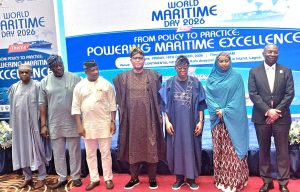
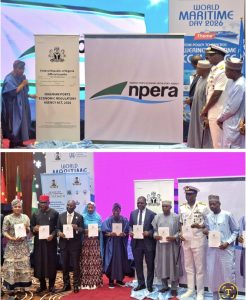
Speaking with journalists on the sidelines of the commemoration of World Maritime Day in Lagos on Friday, Mobereola highlighted what Nigeria has enjoyed from the membership, which it regained after years of trying.
He said the country had been out of the Council for 14 years, with no voice in decisions affecting the industry.
“Nigeria was out of Category C, out of the Council, for 14 years. So there was no voice from Nigeria’s perspective,” he said.
According to him, this narrative has changed because Nigeria now has input from the onset on any international maritime policy being formulated or discussed.
“We put our position forward and we ensure that our position is taken to consensus. And when implementation comes, our position is reflected on it,” he said.
He added that taking part in decision-making is how a country establishes itself as a maritime nation. He disclosed that one or two issues are currently before the IMO Council and that Nigeria’s voice is being heard on them daily.
“By the time the final decision is taken, we are sure that our position will be reflected in it,” he said.
Speaking to the event’s theme of this year’s IMO World Maritime Day “From Policy to Practice: Powering Maritime Excellence”, Mobereola said policies are only guidelines and that their practical value depends on the ability to operationalise them.
He named three priorities for turning policy into practice: empowering indigenous shipping companies with financial access to ports, giving them Nigerian seafarers, and, most importantly, ensuring they have cargoes to carry.
The aim, he said, is to grow the Nigerian maritime industry beyond local operations.
“We want Nigerian flag vessels to be on high seas all over the world. We want the Nigerian flag to be seen everywhere in the world,” he said. He added that he wants to encourage and engage Nigerian seafarers everywhere.
Asked what is delaying disbursement of the over $700million Cabotage Vessel Financing Fund (CVFF) to indigenous shipowners, the NIMASA DG said the agency has made the process easy and open to every ship owner who qualifies.
According to him, applicants are expected to apply through the agency’s portal, then approach their banks for a guarantee, so that the funds return to the agency after the loan tenor and can be made available to other beneficiaries.
He said some ship owners have applied and are now working with their banks to meet the conditions.
Journalists however put it to him that banks are demanding cargo credits from indigenous ship owners. Mobereola dismissed this, saying he is not aware of any bank requesting a cargo guarantee.
He noted that most indigenous ship owners have operated for 20 to 30 years. “How have they been operating without the cargo? How have they been able to have access to financing their vessels? It’s the same system that we are applying here,” he said.