At TCAN Summit 2026, Presidential Aide, Dr Obayendo, Calls for LAMATA-Like Transport Systems for 36 States
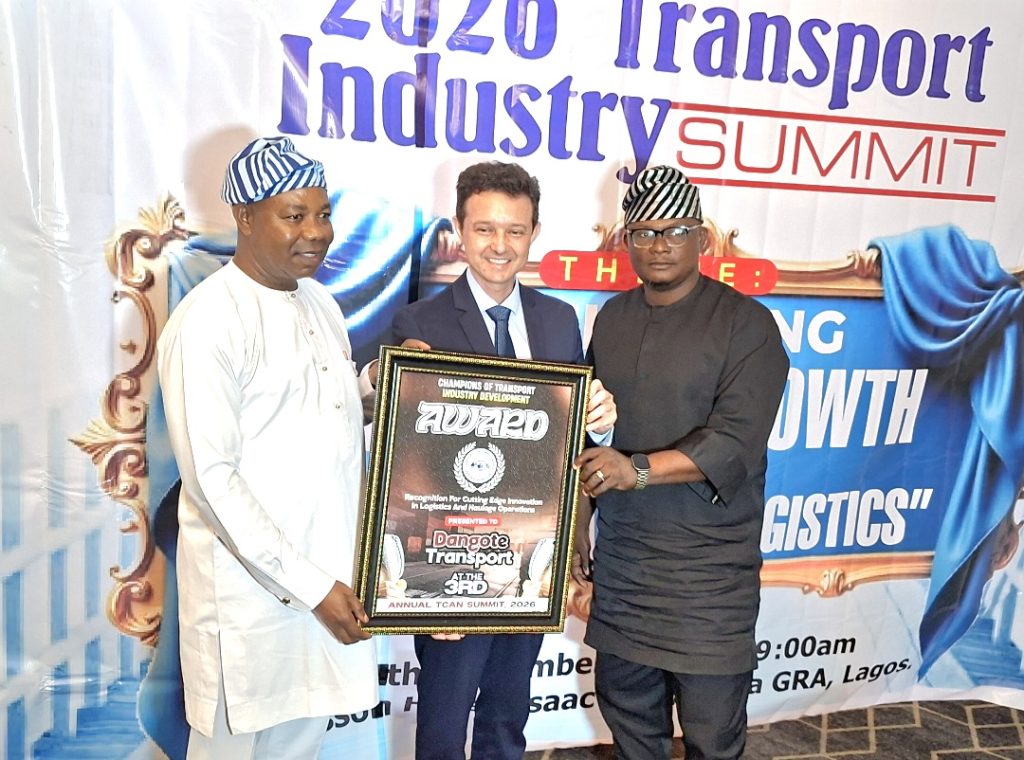
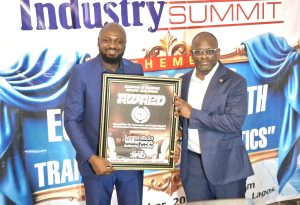
R-L: Dr Segun Obayendo presenting an award to a representative of Dangote Group at the 2026 Summit of the Transport Correspondents Association of Nigeria (TCAN) assisted by the TCAN President, Mr Tola Adenubi

By DAPO OLAWUNI
A presidential aide, Dr Segun Obayendo, has called for the establishment of Lagos Metropolitan Area Transport Authority (LAMATA)-like transport systems in all 36 states, as the Presidency begins a presidential initiative on road transport transformation.
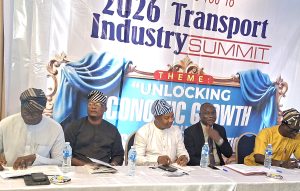
Obayendo, Technical Assistant on Transportation Logistics and Innovation to the Office of the Vice President, made the call on Thursday in Lagos while delivering the keynote address at the 2026 Transport Industry Summit of the Transport Correspondents Association of Nigeria (TCAN). The summit, themed “Unlocking Nigeria’s Economic Growth Through Transportation Logistics,” was held at the Radisson Hotel, Ikeja.
He said President Bola Tinubu’s Lagos background explains the administration’s approach, noting that Lagos is the only state that has consistently made transportation its top agenda.
He recalled that Tinubu, as governor in 2003, put in place the institutional framework that produced LAMATA, a model Africa is now celebrating and proof, he said, of a leader who knows what transportation is and how to go about it.
“It is a pity that as a country, as we speak today, only three states are proud to say that they have established a metropolitan transport authority, and none has come close to the strides and mights that had been achieved in Lagos,” he said.
Obayendo noted that transportation cuts across the federal, state and local governments, but that attention has always fallen on what the federal government failed to do.
That dynamic, he said, is changing, with the government working on CNG and conversion centres.
He added that the road transport sector accounted for 157 trillion in movement in 2025 and should be treated as the most important factor of production, because it is the only sector that can unlock the economy.
The sector currently contributes only 1.5 per cent to GDP, he said, blaming informality that keeps most inflows untracked.
“I am now part of the government, the era of lamentation is over, this is the time for action to be taken” he said.
According to him, the presidential initiative would guide the sector to contribute significantly to the economy. He also said Nigeria is 90 years behind other climes in road transport.
He urged transport professionals to raise their standards and said the sector and its standard operating procedures must be reformed and standardised.
“The 36 States in Nigeria needs LAMATA-like transportation system in operation where all of them would be professional, well trained and with capacity, when this is done, the sector would attract funding into the sector. Whoever is giving you this money would be fully assured that you have capacity to manage it,” he said.
He also called for a national land transport policy to structure the system properly and said orientation on it would start very soon.
Also speaking at the summit, the Minister of Marine and Blue Economy, Adegboyega Oyetola, said the cost, speed, reliability and predictability of moving goods have direct implications for investment, production, trade and employment.
Represented by Mr Paul Ganuwa, Director of Inland Transport Services at the Nigerian Ports Economic Regulatory Agency (NPERA), he said port and waterway performance cannot be considered in isolation, because they are part of a chain that includes roads, rail, warehouses and distribution networks.
He disclosed that, with President Tinubu’s approval, the Ministry is set to begin the country’s most ambitious seaport modernisation programme in more than five decades.
It covers Apapa and Tin Can Island Ports in Lagos, Onne Port, Rivers Port, Calabar Port and Warri Port, and involves reconstructing quay walls, deepening channels for larger vessels, replacing obsolete cargo-handling equipment and further digitalising terminal and gate operations. The aim is to increase capacity, reduce vessel and cargo-handling delays and lower unit logistics costs.
He said the progress is already reflected in the 2025 Container Port Performance Index by the World Bank and S&P Global Market Intelligence, which ranked Tin Can Island Port 10th and Lagos Port Complex, Apapa, 12th among the world’s 20 most improved container ports between 2020 and 2025.
He added that the United States Coast Guard announced in August 2026 the removal of its Conditions of Entry on vessels arriving from Nigeria, after 12 years of additional security requirements.
The removal followed efforts to strengthen compliance with the International Ship and Port Facility Security Code, improve access controls and close identified security gaps.
Looking ahead, he said the Ministry is working with sub-national governments and private partners on deep seaport developments in Akwa Ibom, Bayelsa, Cross River, Ogun, Ondo and Rivers to expand capacity and reduce pressure on existing gateways.
He described the Nigeria Ports Economic Regulatory Agency Act 2026 as an important reform, saying NPERA now gives Nigeria a permanent framework for regulating tariffs and charges, service standards, competition and the protection of port users.
He added that the Ministry will keep supporting inland waterways, stronger port-hinterland links, digitalisation and private-sector participation in financing infrastructure and operating terminals.
The Nigerian Railway Corporation (NRC) at the TCAN 2026 Summit also called for stronger integration of rail, road and maritime transportation to cut logistics costs, boost trade and unlock economic potential.
The NRC Managing Director, Dr Kayode Opeifa, speaking through his Special Adviser, Media, Yinka Aderibigbe, said Nigeria must build a network in which rail, road, maritime, inland waterways and aviation complement one another rather than operate in isolation.
He said rail can ease pressure on highways, lower logistics costs and move agricultural produce, petroleum products and containers, and that the corporation is strengthening freight operations and links to seaports, inland dry ports and industrial centres.
On funding, he said: “Government alone cannot provide all the infrastructure and investment required.”
He urged more private-sector participation in rolling stock, freight terminals and logistics hubs, called for a regulatory environment that supports efficiency and innovation, and warned that tracks, bridges and signalling systems must be protected from vandalism and encroachment.
In his earlier welcome address, the President of TCAN, Mr Tola Adenubi, said transportation should be seen as the backbone of economic activity and that every product consumed or used has a transportation story.
He said high logistics costs, driven by port delays, poor roads, congestion, inadequate storage and weak agency coordination, eventually reach consumers through higher prices. Roads remain central, he said, but cannot carry the whole burden.
According to Adenubi, the objective is not to promote one mode at the expense of another, he called for a connected network in which roads, railways, aviation and waterways each perform their most efficient function.