Indigenous Shipowners Urge Dangote to Back Nigerian Fleet Through Long-Term Cargo Contracts
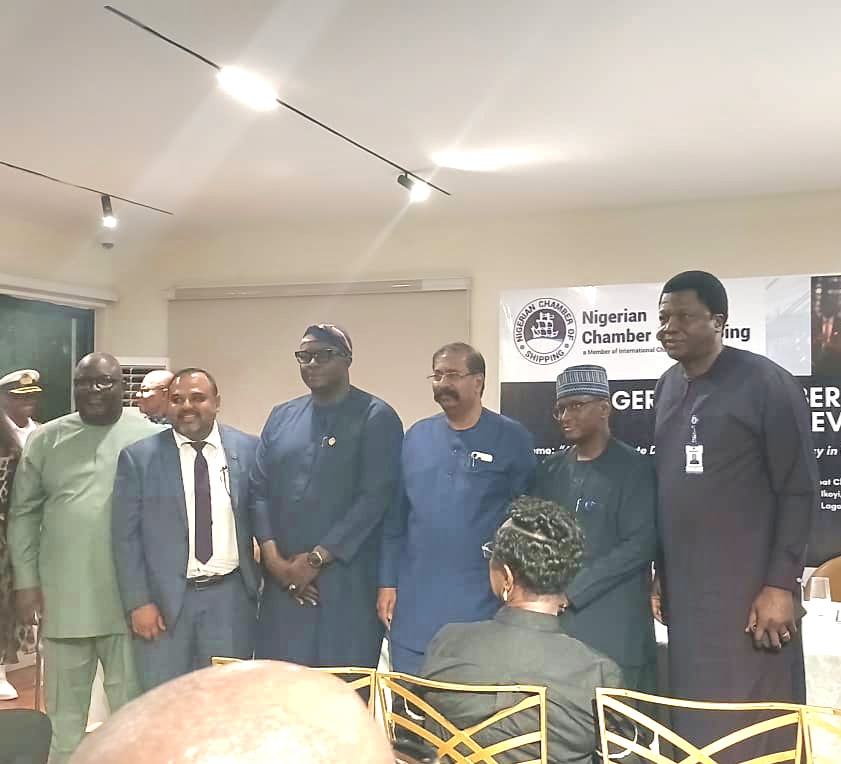
Third from left: Captain Ladi Olubowale, Mr. Edwin Devakumar, Vice President Dangote Group (Oil and Gas), President of Nigerian Chamber of Shipping, Alhaji Aminu Umar, and other guests at the Public-Private Dialogue with CEOs organised by the Chamber in Lagos recently.

Nigerian indigenous shipowners have renewed their call for major cargo owners, particularly the Dangote Group, to support domestic fleet development through long-term Contracts of Affreightment (CoAs) covering petroleum products, cement, fertilizer and other bulk commodities.
The shipowners said their call is based on a fundamental principle of shipping economics: cargo creates trade, trade supports financing, and predictable cargo contracts enable shipowners to acquire vessels and build sustainable fleets.
Captain Ladi Olubowale, former President of the Nigerian chapter of the African Shipowners Association (ASA) and Group Managing Director/CEO of Seamate Maritime Integrated Services Limited, made the case during a Public-Private Dialogue with CEOs organised by the Nigerian Chamber of Shipping in Lagos, recently.
The dialogue, themed “Unlocking Efficiency in the Marine and Blue Economy Value Chain,” brought together maritime industry leaders, cargo owners, terminal operators and policymakers, with Mr. Edwin Devakumar, Group Vice President of Dangote Group, participating as the guest CEO.
Captain Olubowale argued that Nigeria’s maritime development strategy should move beyond simply discussing vessel ownership and focus instead on creating the commercial conditions that make indigenous vessel acquisition bankable.
He said “Shipping follows cargo. Give credible Nigerian shipowners long-term Contracts of Affreightment, and those contracts become the commercial foundation upon which vessels can be financed, acquired and deployed.”
He explained that shipping is fundamentally a capital-intensive private-sector business and that Nigerian shipowners cannot sustainably acquire large vessels without predictable cargo volumes and bankable employment contracts.
Rather than waiting for indigenous companies to first acquire vessels before giving them cargo, he proposed reversing the model: secure the cargo, establish credible long-term contracts, structure the financing, and allow qualified Nigerian operators to acquire vessels against those contracts.
According to him, for Dangote Group, whose expanding refinery, cement, fertilizer and industrial operations are generating substantial maritime cargo volumes, this could provide an opportunity to become an important catalyst for Nigerian fleet development.
Olubowale proposed that Dangote consider allocating portions of its maritime cargo requirements to qualified indigenous shipping companies under structured multi-year CoAs.
He noted that such arrangements could enable Nigerian shipowners to approach banks, development finance institutions, export credit agencies, leasing companies and international vessel financiers with identifiable cargo, predictable revenues and long-term commercial contracts.
From cargo contracts to national fleet capacity, Captain Ladi Olubowale also drew attention to the continued participation of foreign-controlled vessels in the transportation of Nigerian crude and petroleum cargoes.
He noted that large tankers, including Suezmax vessels, regularly call at Nigerian crude terminals such as Forcados, Bonny and Escravos, generating significant freight revenues from Nigerian-origin cargo.
The policy question, he argued, should therefore be: How can Nigeria progressively convert the movement of its own cargo into domestic maritime assets, employment, technical capability, financing opportunities and long-term national economic value?
For Capt. Olubowale, the answer is not protectionism without capacity. “It is the deliberate creation of commercially competitive Nigerian shipping capacity.
“There is no structural reason why Nigerian companies should not ultimately own and operate Suezmax tankers and other large commercial vessels. But fleet development must be connected to cargo, finance, technical capability and long-term employment,” he said.
He described the ambition to develop Nigerian-owned Suezmax capacity as part of a broader vision for indigenous participation in the transportation of crude oil and refined petroleum products.
On a cargo-backed fleet development model, Olubowale advocated tha Nigeria’s maritime policy should therefore encourage a model built around four connected pillars: Cargo, Contract, Finance and Vessel.
According to him, cargo owners provide predictable cargo volumes. Long-term CoAs convert those volumes into bankable contracts. Financial institutions fund commercially viable vessel acquisitions. Nigerian shipowners then provide the vessels, technical management, employment and maritime services required to execute the trade.
‘This approach would complement initiatives such as the Cabotage Vessel Financing Fund rather than making indigenous fleet development entirely dependent on government-backed financing.”
Capt. Olubowale stressed that government has an important role, but primarily as an enabler, regulator and facilitator while the commercial engine must remain the private sector.
“Nigeria’s ambition to build a globally competitive marine and blue economy will require deeper collaboration between cargo owners, indigenous shipowners, banks, institutional investors, ports, regulators and government.
“Government policy should create the enabling environment: predictable regulation, competitive ports, access to finance, local-capacity development and transparent commercial frameworks. Cargo owners should provide commercial opportunities. Financial institutions should finance bankable projects. And competent private-sector operators should invest, acquire assets and deliver the services,” Captain Olubowale said, describing this as a model of private-sector-led, regulator-enabled and development-focused maritime growth.
He therefore called for continued dialogue among policymakers, cargo owners, shipowners, terminal operators, financial institutions and other industry stakeholders, noting that sustainable maritime development requires decision-makers across the entire value chain to work toward common economic objectives.
Olubowale said the strategic opportunity of turning Nigerian trade into Nigerian maritime capital extends beyond Dangote.
According to him, “Nigeria is one of Africa’s largest producers and consumers of petroleum products, cement, fertilizer, agricultural commodities and industrial goods. As intra-African trade expands, particularly under the African Continental Free Trade Area (AfCFTA), maritime transportation will become increasingly important.
“The central question is therefore not simply whether Nigeria can own more ships. It is whether the country can deliberately use its enormous cargo base to create a commercially sustainable indigenous shipping industry.
“Long-term cargo commitments can help Nigerian operators build fleets, create seafaring and shore-based employment, retain freight earnings within the economy, strengthen maritime technical capacity and position Nigerian shipping companies to participate more competitively in intra-African trade.
‘Dangote and other major Nigerian cargo owners can therefore play a role extending beyond industrial production. Through structured partnerships with credible indigenous operators, they can help create the commercial foundation for the next generation of Nigerian shipping companies.”
Capt. Olubowale concluded “The maritime industry must ultimately be driven by the private sector. Government should create the enabling environment, while cargo owners, financiers and indigenous operators build the commercial ecosystem. If we connect Nigerian cargo to Nigerian maritime capacity, we will not merely acquire ships—we will build a sustainable shipping industry.”