Implication of US-Iran War on Nigerian Shipping Sector, Inflation May rise by 5 percent

By DAPO OLAWUNI
In the early hours of 28th February 2026, the world woke up to news that would send shockwaves through global energy markets and place Nigeria at a critical economic crossroads. The United States had launched a military operation against Iran, and nothing in the world of shipping would remain the same.
What began as inconclusive diplomatic talks between Washington and Tehran had, within days, exploded into one of the most dangerous military confrontations the Middle East has seen in years.
Israel struck first, announcing “preventative” attacks on Iranian targets. Iran responded forcefully, launching missile strikes on Israel, targeting Riyadh in Saudi Arabia, and attacking US air bases in Qatar, Kuwait, the United Arab Emirates, and Bahrain. The world’s most critical maritime chokepoint was suddenly at the centre of a war.
The Strait of Hormuz, through which between 20 and 30 percent of the world’s globally traded crude oil and a comparable share of liquefied natural gas pass daily has effectively ground to a halt.
Maritime monitoring firms report that commercial traffic volumes through the strait have collapsed by approximately 70 percent. More than 200 vessels, including roughly 150 oil and gas tankers, are anchored outside in a tense standoff, while around 170 containerships remain trapped inside.
The Islamic Revolutionary Guard Corps (IRGC) has issued stark warnings cautioning all vessels against transit, giving military weight to what is fast becoming a de facto blockade.
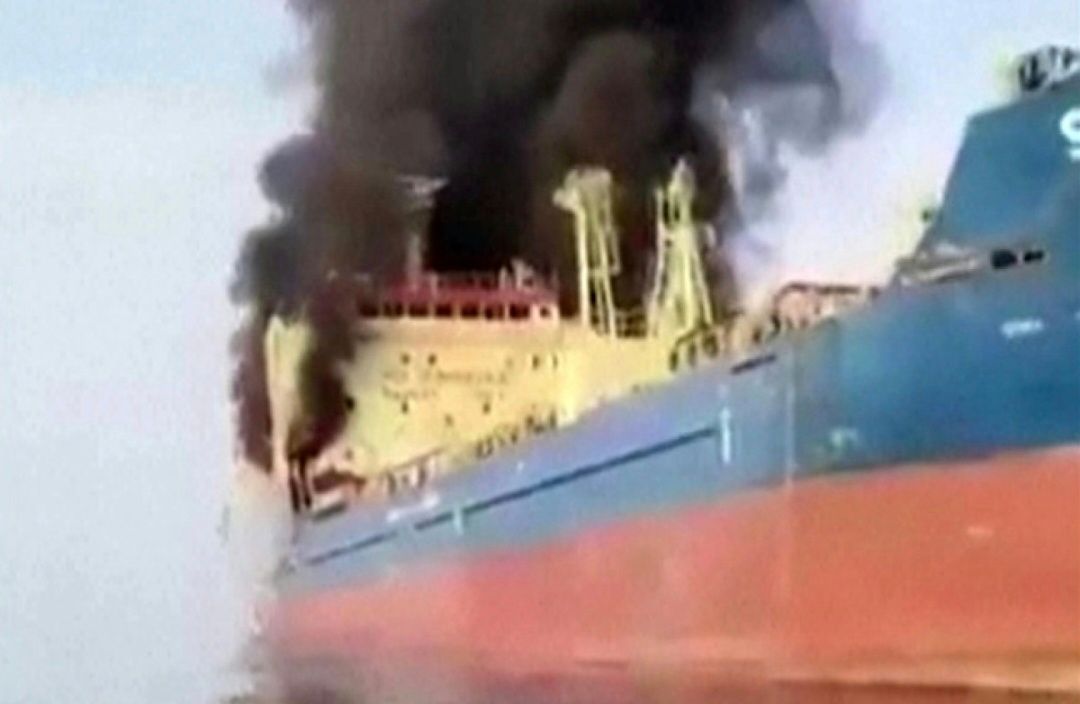
At least three commercial tankers, including the Skylight and MKD Vyom, were reportedly damaged on 1st March. Maersk, MSC, CMA CGM, and Hapag-Lloyd have all suspended passage through the corridor, with several vessels now rerouting around the Cape of Good Hope at significantly higher cost and time.
SEREC’s Position Amidst Markets on Edge, Freight Rates Climbing, Nigeria Caught in the Crossfire
Nigeria is caught in the crossfire and the economic consequences are cascading fast. The Sea Empowerment and Research Center (SEREC), in an official communiqué issued on 1st March 2026, signed by its Head of Research, Fwdr. Eugene Nweke, warns that oil prices may range between $110 and $140 per barrel under sustained tension. Global freight rates could surge by 15 to 40 percent, while marine war-risk insurance may spike by as much as 200 to 400 percent in high-risk corridors. A prolonged disruption raises the spectre of global stagflation, high inflation combined with weakened economic growth.
For Nigeria, the crisis is a double-edged sword. Elevated crude prices could generate between $18 billion and $22 billion in additional annual oil revenue at $120 per barrel, with short-term GDP growth of 1 to 1.2 percent. But inflation may rise by 3 to 5 percent, exchange rate volatility could worsen, and the knock-on effects on food and transport prices will be felt by ordinary Nigerians.
Higher freight rates and insurance premiums will also drive up the cost of imports landing at Lagos, Apapa, and Tin Can Island, squeezing freight forwarders, clearing agents, and consumers alike.
“Without prudent fiscal discipline, revenue gains could be offset by macroeconomic instability.” SEREC stated
Nigeria’s Strategic Moment — and What Must Be Done
Amid the turbulence, one development stands out as potentially game-changing , and that is the Dangote Refinery. By reducing Nigeria’s dependence on refined fuel imports, the refinery directly lowers the country’s exposure to freight and insurance shocks, eases pressure on the naira, and could reduce imported fuel inflation by an estimated 1 to 2 percentage points.
It also positions Nigeria to expand refined product exports across West and Central Africa under the AfCFTA framework, at precisely the moment the continent is scrambling for supply alternatives.
“If strategically managed, the refinery serves as a national economic stabiliser during external shocks” SEREC said in its report, adding that the critical qualifier is policy coherence.
SEREC’s recommendations to the Nigerian government are clear: channel oil windfall gains into stabilisation funds and infrastructure, not recurrent expenditure; guarantee steady crude allocation to domestic refineries; strengthen maritime security coordination across the Gulf of Guinea; expand strategic petroleum reserves; and deepen regional trade integration to reduce overreliance on volatile extra-African shipping routes.
The Strait of Hormuz crisis is not merely a story about ships and oil. It is a story about choices, the choices Nigeria makes in the coming weeks about how it manages a revenue windfall, positions its refining capacity, and takes seriously the business of maritime security.
The SEREC’s Head of Research, Fwdr. Eugene Nweke said that “Nigeria’s resilience will depend not on crude prices alone, but on disciplined fiscal management, domestic refining optimisation, trade diversification, and maritime competitiveness.”