Shippers Council Sensitizes Cross-border Traders, Farmers on Use of Border Information Centre, Seme

R-L: Customs Area Controller, Seme Border, Comptroller Wale Adenuga; Director, Consumer Affairs, Nigerian Shippers’ Council (NSC), Mrs. Ify Okolue; Deputy Director, Trade Services, NSC, Adaora Nwonu; and Sarah Okporufe, ECOWAS Commission, and a representative of the GIZ during a sensitization programme for cross-border traders on the use of Shippers Council BIC in Badagry, on Wednesday.

By DAPO OLAWUNI
The Nigerian Shippers’ Council (NSC), in collaboration with the Economic Community of West African States (ECOWAS) Commission, Deutsche Gesellschaft für Internationale Zusammenarbeit (GIZ), Nigeria Customs Service (NCS) on Wednesday carried out a sensitization exercise for traders and farmers around the Seme border axis on the need to make use of its Border Information Centre (BIC) located at the border.
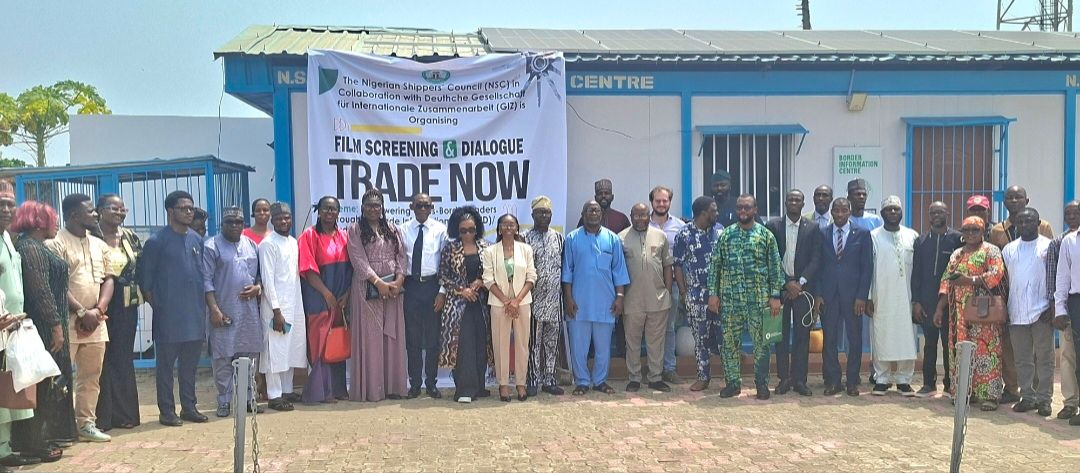
The BIC according to the agency was established in 2014 to encourage cross border trade. It is to solve challenges faced by traders at the borders who are not aware of what is required of them in getting goods across the border.
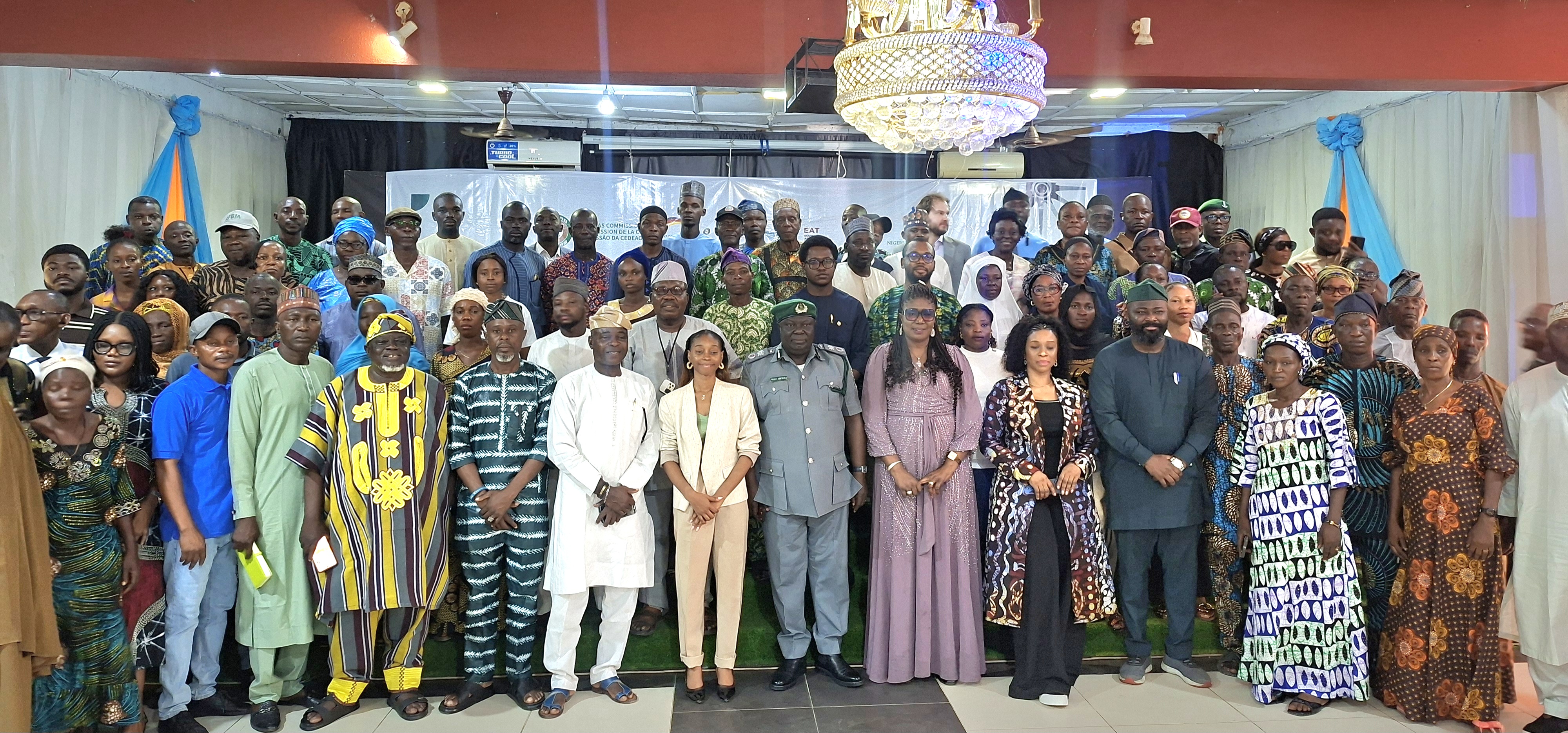
Speaking at the event themed: “Trade Now: Empowering Cross-Border Traders through the Trade Information Desk (TID),” the Executive Secretary of NSC, Dr. Akutah Pius expressed satisfaction at the recent surge in the use of the BIC
“We are encouraging you all to start using the BIC, we are happy that the use of the facility has increased” he said
Akutah thanked the GIZ and ECOWAS Commission for their strategic roles in organising the event, even as he also appreciated their efforts at the Seme Border to simplify cross-border business.
Earlier, the Director of Consumer Affairs Department of the ShippersCouncil, Mrs. Ify Okolue, said the mandate of the Council goes beyond seaport, and covers the border posts.
She noted that the BIC initiative aligns with the Council’s mandate as Port Economic Regulator and complements other interventions, including Inland Dry Ports, Vehicle Transit Areas, and dispute resolution platforms.
According to her, the Council’s Border Information Centre (BIC) at Seme Border provides traders with accurate information on tariffs, documentation, standards, and dispute resolution, reducing delays and trade costs.
Noting that BICs are already operational at Seme-Krake, Jibia-Maradi, Illela-Birnin Koni, and Mfum-Nkot borders, she observed that Idiroko BIC will become operational before the end of the second quarter of 2026.
She urged traders, especially women and youth, to utilise the centres to enhance transparency, compliance, and regional trade efficiency.
“The BIC serves as a structured platform for transparency, guidance, and dispute resolution. It provides traders with accurate information on tariffs, documentation requirements, import and export procedures, standards, sanitary and phytosanitary measures, and other regulatory obligations. By reducing information gaps, the Centre directly addresses one of the key barriers to trade formalisation and competitiveness” she said
Meanwhile, the Director of Trade, ECOWAS Commission, Mr. Kolawole Sofola, stressed the need for regular sensitisation and awareness campaigns on the best approaches, documentation and dispute resolution at the Seme Border area.
Sofola, who was represented by Sarah Okporufe, also observed that the role of e-Commerce, gender-inclusive trade and sustainable practices should be prioritised in the sensitisation campaigns.
The ECOWAS team observed that a lot of traders at the Seme border corridor aren’t exploring the ECOWAS Trade Liberalization Scheme (ETLS) to enjoy the export or import of goods that are devoid of Customs tariffs, especially goods that originate from the subregion.
“Another right that traders have is that as soon as they have a valid passport, they can move to any ECOWAS country to reside or transact businesses. There is a process to have a biometric ECOWAS identity card that we expect will be adopted by Nigeria to allow traders and residents enjoy better access for businesses and other purposes,” the ECOWAS Commission representative said.
Speaking on behalf of the Comptroller-General of Nigeria Customs Service (NCS), Dr. Bashir Adewale Adeniyi, the Customs Area Controller, Seme Border Command, Comptroller Wale Adenuga, assured a maximum of 40 hours for the processing of legitimate imports and exports via the Seme Border.
According to him, farmers are particularly given consideration because of their perishable items.
While observing that trade facilitation is the core philosophy of the NCS under Adeniyi’s leadership, Comptroller Adenuga pledged the NCS’s continuous support at the Seme Border towards facilitating legitimate trade.
He encouraged traders to visit Seme Customs and the BICs to seek information about their trade in order to be informed about the requisite documentation, duties and goods that are prohibited.
“At Seme Customs, we will give you adequate information and adequate support. We want traders and border residents to engage in legitimate trade. We don’t tolerate illegitimate trade. We have engaged with our counterparts in Seme as well as other security agencies to ensure a seamless corridor for trade,” Adenuga said.
The highpoint of the dialogue session was the presentation of a film in Yoruba and English to explain to the stakeholders on the use and importance of the Shippers Council BIC.