Container, Vessel Scarcity Threatens Nigeria’s ₦60trn Export Market — AWAEMAP
By DAPO OLAWUNI
The President of the Association of West African Exporters and Marine Professionals (AWAEMAP), Hon. Bunmi Olumekun, has raised an alarm over a worsening scarcity of shipping containers at Lagos ports, as well as refusal of shipping lines to pick export cargoes, warning that the crisis is threatening to undermine Nigeria’s growing export market.
The warning comes as Nigeria’s export sector has recorded significant momentum under President Bola Ahmed Tinubu’s administration.
Nigeria recorded a 21 per cent increase in non-oil exports in 2025, with export earnings rising to $12.8 billion, driven by policy reforms implemented by the Federal Ministry of Industry, Trade and Investment.
Overall, Nigeria’s total export value in 2024 stood at ₦60.690 trillion, according to data from the National Bureau of Statistics.
But speaking with journalists in Lagos, Olumekun warned that deliberate actions by foreign shipping lines are now putting those gains at risk.

“The shipping companies don’t even bring vessels to Nigeria to take exports again. They prefer to go to Cotonou than coming to Nigeria. They want to make sure that Nigerian goods are not sellable outside Nigeria. You will see a vessel coming in to discharge cargoes and sail empty to Cotonou to carry exports,” he said.
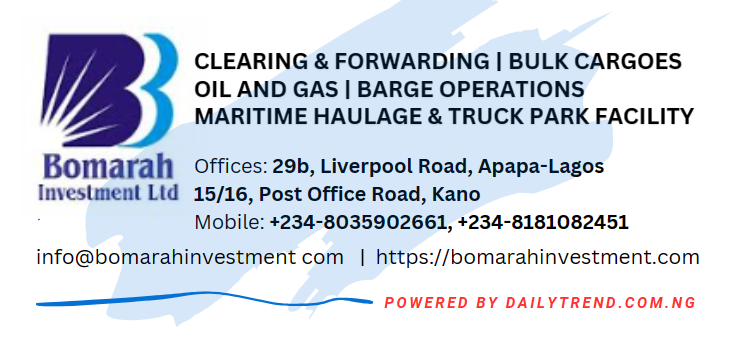
The AWAEMAP president said export cargoes are now piling up inside terminals across the Lagos ports with no vessels available to evacuate them and there are no containers to load intending exports.
“Currently, we are having a challenge of getting containers to load our export cargoes out of the country. Currently we have more export than import cargoes lying inside the terminals,”
“Somebody told me that his export containers of perishable items have been at the port since December 2025 and there is no vessel to evacuate them” Olumekun stated.
He said the problem is further compounded by lack of space at port terminals to accommodate export containers, a situation he said has triggered a return of the port congestion that plagued Lagos ports before the introduction of the e-call-up system.
Containers, he noted, are now queuing on port access roads, while Export Processing Terminals (EPTs) are holding containers for two to three weeks without evacuation.
“We are gradually going back to the era of port congestion without e-call-up,” Olumekun warned.
The AWAEMAP president also raised concerns that the ongoing conflict in the Middle East could provide foreign shipping lines with additional justification to avoid Nigerian ports, further worsening the situation.
Despite the setbacks, Olumekun acknowledged the progress recorded under the current administration. “Under President Bola Ahmed Tinubu, the Nigerian economy is improving in terms of export, but these foreigners want to cripple it,” he said.
The growth in Nigeria’s export performance has been attributed to improvements in export procedures, targeted trade reforms, and increased value addition across key non-oil sectors.
In the first half of 2025 alone, non-oil exports rose by 19.6 per cent to $3.25 billion, compared to the same period in 2024, with cocoa beans, urea and fertiliser, cashew nuts, and sesame seeds among the leading commodities.
Olumekun called on the Federal Government to urgently address the container scarcity and, more broadly, to establish a national shipping line capable of transporting goods from Asian markets and handling Nigeria’s export trade independently of foreign carriers.
“It is time Nigeria has its own shipping line, even if it is to move cargoes from these Asian countries and deal exports,” he said.